





Skip to content
  • Categories
  • Recent
  • Tags
  • Popular
  • Unsolved
Collapse
Discussion Forum to share and further the development of home control and automation, independent of platforms.
V

vwout

@vwout
UI not loading after upgrading to 26318
tunnusT
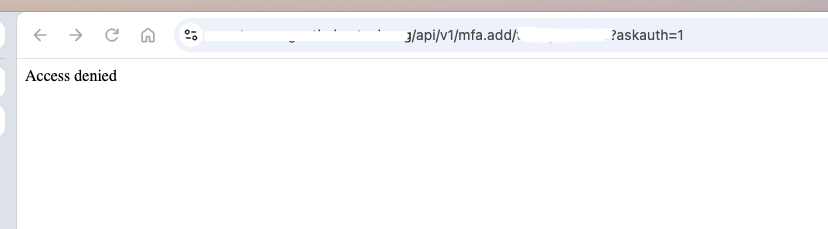
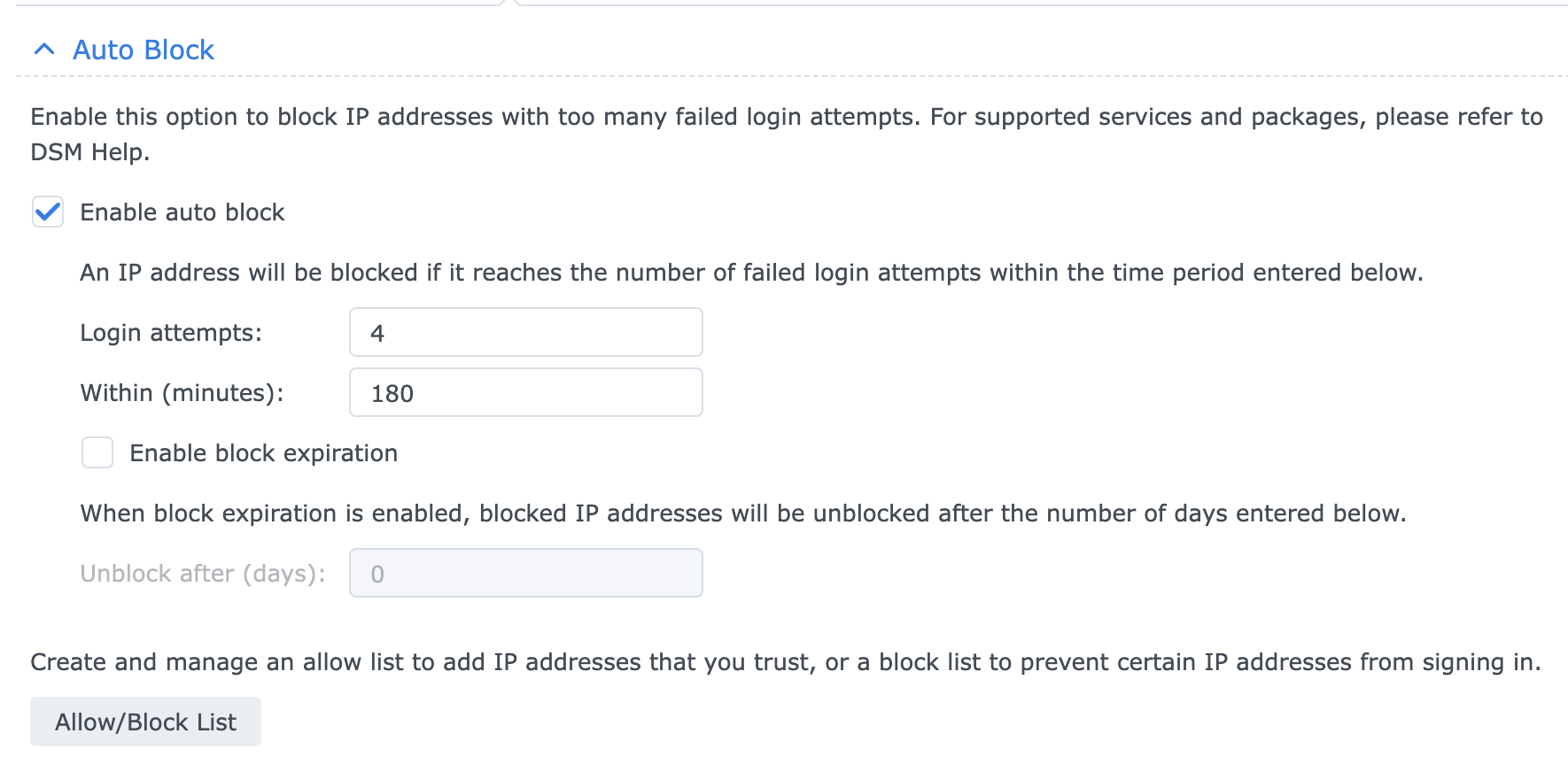
Sorry for a hasty post, will update some details later, but the scenario is that I managed to type a wrong password for too many times and had the following users.yaml section: authtrack: max_attempts: 4 within_minutes: 180 # 180 minutes = 3 hrs block_expiration_minutes: 10080 # 7 days At this time I used build 26298. Then noticed there's a new build with a bypass blocking feature (and yes, it said it won't remove existing block). Anyway, went ahead and upgraded to 26318, but the problem now is that UI is not loading at all (page does not answer). This also means that I cannot use "http://reactor_host:port/diag/clear_authtrack?askauth" command to clear the block (or use any other source IP for login). Docker container stays up & running and does not exit. I'll try to dig up some logs, but anything that I could immediately try out (could I delete a particular file for example)? EDIT: some logs [latest-26318]2026-11-17T20:42:32.337Z <Rule:INFO> MSR startup (rule-lculfnhm in Miscellaneous) started [latest-26318]2026-11-17T20:42:32.343Z <httpapi:NOTICE> httpapi#1 HTTP server listening on :::8111 [latest-26318]2026-11-17T20:42:32.347Z <httpapi:INFO> httpapi#1 local docs found in /opt/reactor/docs/html; setting up static service [latest-26318]2026-11-17T20:42:32.354Z <app:NOTICE> Starting WSAPI... [latest-26318]2026-11-17T20:42:32.355Z <wsapi:NOTICE> wsapi: starting version 26298 protocol [latest-26318]2026-11-17T20:42:32.523Z <Engine:INFO> Engine#1 master timer tick, local time "17/11/2026 22:42:32" (TZ offset 120 mins from UTC) [latest-26318]2026-11-17T20:42:32.542Z <Engine:NOTICE> Starting reaction MSR startup<SET> (rule-lculfnhm:S) [latest-26318]2026-11-17T20:42:32.545Z <Notifier:null> Module Notifier v26186 [latest-26318]2026-11-17T20:42:32.545Z <Engine:INFO> MSR startup<SET> all actions completed. [latest-26318]2026-11-17T20:42:32.557Z <Rule:INFO> Rule#rule-lculfnhm reaction rule-lculfnhm:S completed [latest-26318]2026-11-17T20:42:32.558Z <default:null> Module NotifyTelegram v26177
Multi-System Reactor
[Resolved] Hubitat upgrade 2.5.3.123 may have broken login
3
Topic thumbnail image
Multi-System Reactor
Reactor (Multi-System/Multi-Hub) Announcements
toggledbitsT
Build 21228 has been released. Docker images available from DockerHub as usual, and bare-metal packages here. Home Assistant up to version 2021.8.6 supported; the online version of the manual will now state the current supported versions; Fix an error in OWMWeatherController that could cause it to stop updating; Unify the approach to entity filtering on all hub interface classes (controllers); this works for device entities only; it may be extended to other entities later; Improve error detail in messages for EzloController during auth phase; Add isRuleSet() and isRuleEnabled() functions to expressions extensions; Implement set action for lock and passage capabilities (makes them more easily scriptable in some cases); Fix a place in the UI where 24-hour time was not being displayed.
Multi-System Reactor
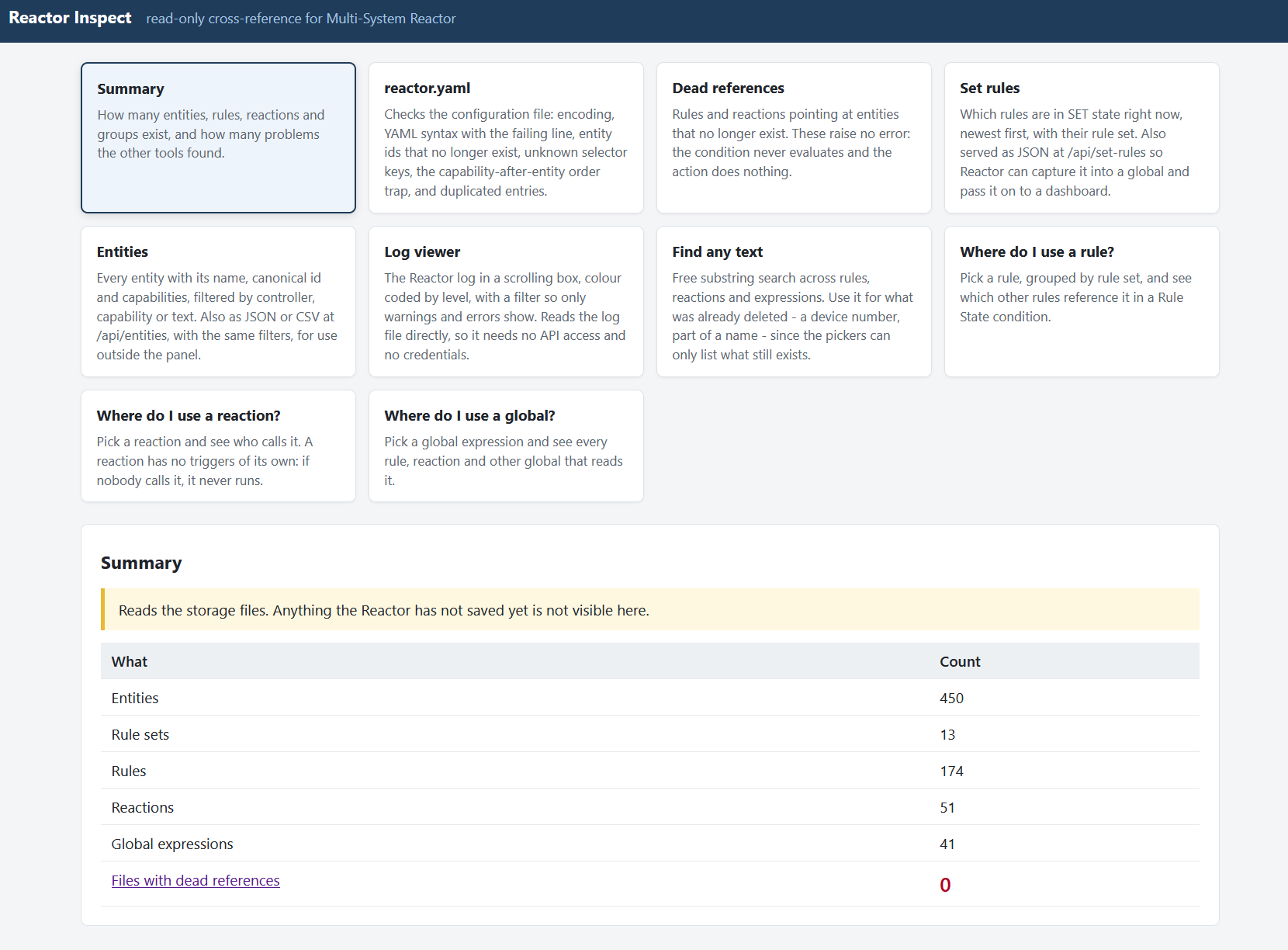
Reactor Inspect - a small read-only helper panel for MSR
wmarcolinW
Topic thumbnail image
Multi-System Reactor
Reverse proxy & API ACL
tunnusT
I'm trying to allow anonymous access from a local network to /api/v1/log, but the problem now with the reverse proxy configuration is that this access is open via proxy to the internet. At least I wasn't able to configure ACL so that only an access from a local network would be permitted. reactor.yaml: baseurl: "http://192.168.1.12:8111" proxy_baseurl: "https://external.com:30000" trusted_proxy: "192.168.1.12" Local traffic would originate from 192.168.1.0/24 network. Synology is acting as a reverse proxy and hosting MSR as a docker container (which has its own network and IP 172.18.0.5). MSR build is latest-26298-fbb75fb8 users.yaml: - url: "/api/v1/log" method: "GET" source_ip: 172.18.0.0/24 allow: true Using the above ACL works, but it enables access via proxy also. If I use source_ip: 192.168.1.0/24, then it doesn't work either locally or remotely. So I'm kinda lost what should I use as source_ip in this case?
Multi-System Reactor
MFA
T
Topic thumbnail image
Multi-System Reactor
Grouped devices
G
I've seen many of you using Dynamic Group Controller. I'm using it myself for monitoring device battery levels. I've read and re-read the Dynamic Group Controller docs and still cannot come to an answer for my question so let me paint my scenario: I've migrated from EchoSpeaks in Hubitat ('cause borked and seemingly unmaintained) to Alexa Devices in Home Assistant ('cause not borked in 2026.11.0) to be able to send TTS to my Echo devices. In EchoSpeaks I could create groups. Sweet. In Alexa Devices I don't seem to be able to do so. As such, my thought was "wait - isn't there a way in MSR?" Is this an effective scenario that Dynamic Group Controller can be used for?
Multi-System Reactor
Login protections
tunnusT
Topic thumbnail image
Multi-System Reactor
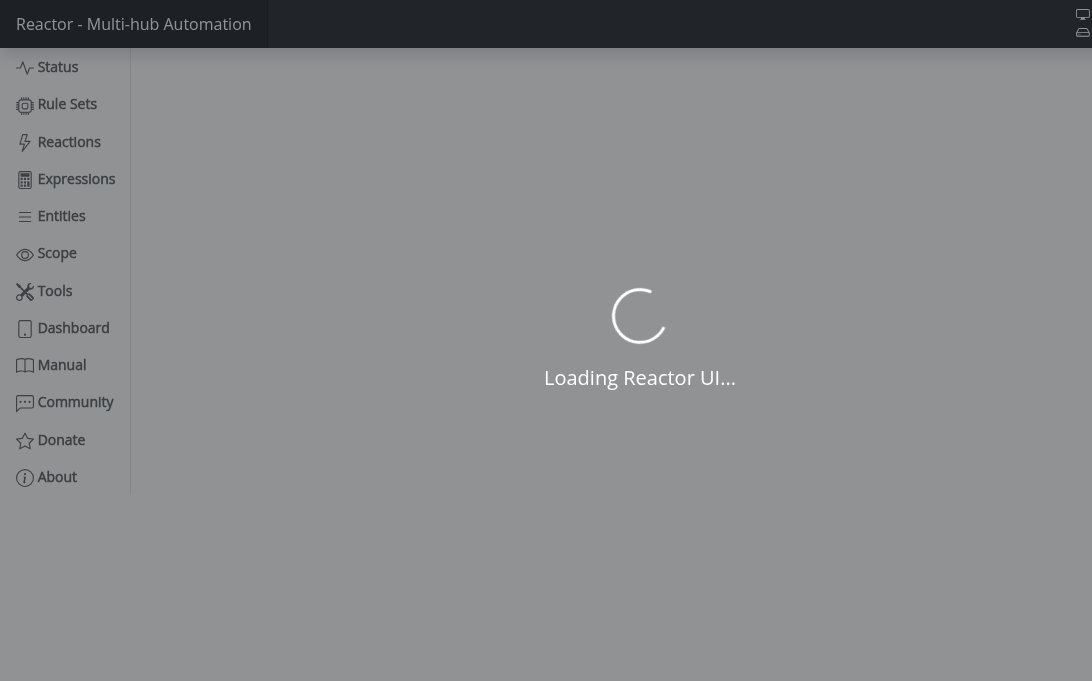
Reactor Build 26284 stuck at Loading Reactor UI
T
Topic thumbnail image
Multi-System Reactor
MSR with reverse proxy
tunnusT
I'm trying to use MSR via reserve proxy in Synology DSM, but MSR page does not load https://<public ip>:30000/reactor/en-US/ At the same time logging page loads normally https://<public ip>:30000/api/v1/log I thought maybe authentication was messing it up, but there was no deny entries in the log, and also disabling authentication did not make any difference. For this use case VPN is not an option (that works, but as said not an option for this particular use case). Any ideas what could cause this? MSR build latest-26242-28d69aa8, Chrome browser
Multi-System Reactor
Missing attribute after upgrade
3
Topic thumbnail image
Multi-System Reactor
Use of Google Gemini as an MSR and Hubitat configuration aid
R
I may be late to the AI party on this, but I recently ran into difficulty installing and configuring the Nexia Thermostat Manager on my Hubitat C8 Pro. Hoping for some immediate help I performed a Google search on my problem. I was a bit surprised to see Gemini jump into assist. Gemini walked me through the steps to clean up the failed install, followed by a script for successful installation and configuration. I would not have expected Gemini to "know" this much about Hubitat. Next I sought assistance MSR with the Entity Actions needed to set up the desired controls. I was unclear which of the attribute fields I should to set the cooling an heating temperatures. Once again, Gemini came back not with just a link to a possible explanation, but an easy to follow explanation instead. Once again, I did not expect Gemini to provide such detailed assistance with MSR. Gemini will be a key tool in my HA toolkit in the future.
How-To
[MSR] Native fan capabilty
therealdbT
Nothing more to add. I see we have hvac_blower, but, anyway, maybe a native fan on the same assumptions of the fan from HASS could be reasonable. I have a couple of them. ie, this is from ESPHome via HASS. x_hass.domain="fan" x_hass.entity_id="fan.kitchen_seashell_hood_ventilation_fan" x_hass.floor_id=null x_hass.services=["fan","esphome"] x_hass.source="esphome" x_hass.state="off" x_hass_attr.friendly_name="Seashell Hood Ventilation Fan" x_hass_attr.percentage=50 x_hass_attr.percentage_step=25 x_hass_attr.preset_mode="" x_hass_attr.preset_modes=[] x_hass_attr.supported_features=49 Thanks.
Multi-System Reactor
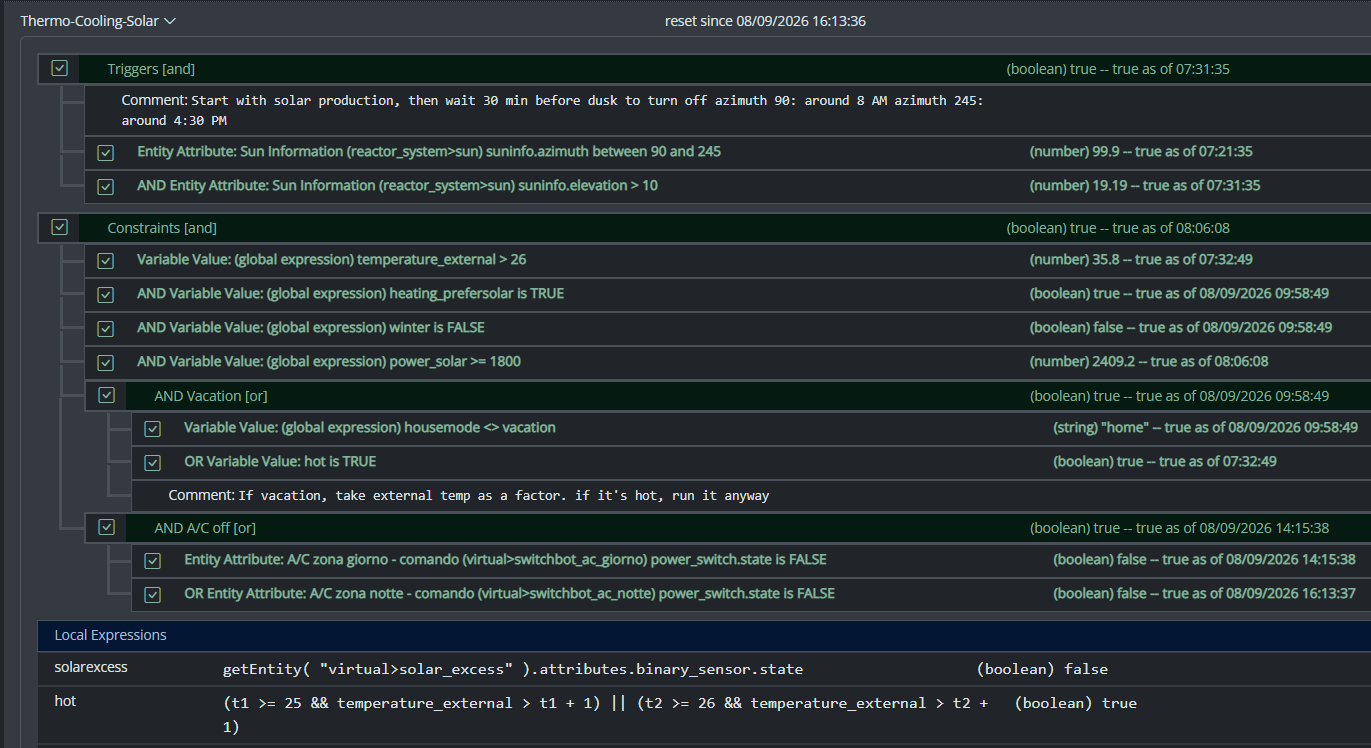
[MSR] Rule do not fire
therealdbT
Topic thumbnail image
Multi-System Reactor
Rule condition shows TRUE in UI but Rule never transitions to SET — survives full restart
N
Build: latest-26221-b25bb3e3, Docker on Synology. Hi, I have a Rule whose Trigger/Constraints reference other Rules via Rule State ... is TRUE. At some point it stops firing. Expanding the rule's condition tree in the UI shows every Trigger and Constraint condition green/TRUE — confirmed live by walking into the room and watching Motion go true in real time. Rule History shows no new SET, just old reset entries. Tried, on the same rule, same evening: recreating the trigger conditions with fresh IDs, recreating the constraint conditions with fresh IDs (flat and wrapped in a new Group — wrapping in a Group produced one SET, but it didn't reproduce on repeat attempts with the same structure), and finally a full container restart with a verified-correct saved rule. Still no SET, even with a fresh live motion event right after the restart. Separately, I found that this rule (and its 10 per-room clones) share identical internal condition/group IDs with each other — leftover from a batch clone done months ago, never regenerated. Not sure if that's related, since fixing the IDs didn't reliably fix the symptom either. Has anyone seen a Rule State condition show TRUE in the UI without the Rule ever producing a SET, surviving a clean restart? Thanks in advance
Multi-System Reactor
DynamicGroupController and attributes
therealdbT
Hey @toggledbits I'm back to trying to optimize a couple of things based on dynamic group. First of all, I think I found a typo in the doc: primary_attribute: "binary_sensor.state" primary_attribute_value: | d = false; each id in members: d = getEntity(id)?.attributes?.power_switch?.state or d, d I think the correct code snippet is d = false, All that said, my use case for dynamic groups is to group 3 different climate devices, so I could easily command them at the same time. Commands are good, but sometimes I want to check if any of the devices are on, and that's easily done with a similar snippet as the one you have in the docs. But this is limited to the primary attribute, while I want to have any of the attributes in the group to be driven by a similar logic (while all are null in the group). ie, access hvac_control.mode and see if any of the unit is set to cool, or heat. Is that possible, without re-defining an expression in each of my rules? Thanks!
Multi-System Reactor
Unofficial thread for compatibility
tunnusT
As there are statements about compatibility for home assistant versions in MSR new version announcements (e.g. "HassController: Bless Hass to 2025.7.3"), I thought it would be good idea to track other controllers as well. As an example, I can confirm that build "latest-25208-c53e8513" works with Hubitat Elevation C-8 platform version 2.4.2.134 using Maker API. Updates: (the latest versions first in the list) OK: build "latest-25264-2fbe9217" with Hubitat C-8 platform v. 2.4.3.123
Multi-System Reactor
Ooops - Deleted Reactor Ex Machina II
R
I accidentally deleted Reactor Ex Machina II (REM II) from my Reactor rules. I tried to recover it by deleting the .json and .dval in the Rules subdirectory and then recreating it from Togglebits original posting, but that did not work. Does anyone know how to recover REM ll ?
Multi-System Reactor
Bail out of failed reaction?
T
Topic thumbnail image
Multi-System Reactor
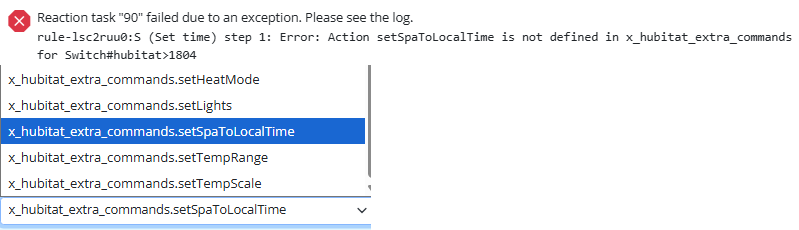
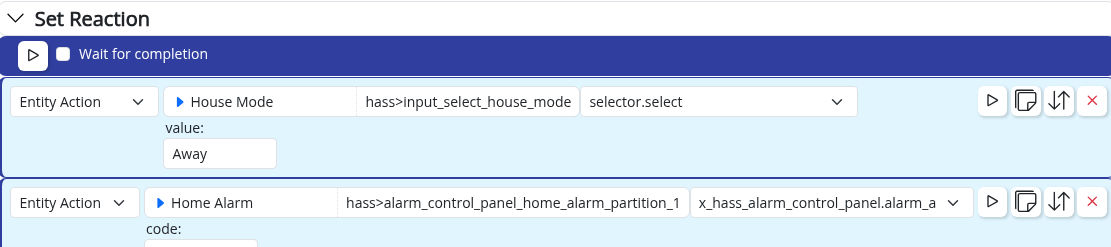
Arming Envisalink panel from MSR
T
Topic thumbnail image
Multi-System Reactor
About
Posts
3
Topics
0
Shares
0
Groups
0
Followers
0
Following
0

Posts

Recent Best Controversial

  • Moving to Docker
    V vwout

    Hi all, @akbooer asked me to join this community - so far I was only active on MCV. I am the author of the Docker image for openluup that is referred to in this thread.

    I quickly read the complete thread. Most of the comments contain valid statements.
    Personally I would not avoid containers as the pest - in fact, you can't ;). Containers exist for a long long time (at least in the Linux kernel) and play an important role for isolation of processes/networks/filesystems. Docker has made this system significantly easier to use and understand. By now also Windows supports containers and (in the latest builds even without HyperV virtualization) can even run Linux containers. This begins to fade the most significant difference between VMs and containers away, this being virtualization (for VMs) versus isolation (containers). Opposed to VMs, containers are very lightweight (try creating a VM that runs openLuup in under 7MB :D). A container does not contain a kernel and does not have an operating system. It also cannot run on itself.

    Maybe some of you experienced the 'dll hell' - the issue where the installation of an application breaks another application, because one overwrites a shared library of the other. This is what you can prevent by packaging applications and one of the reasons for things like snap, flatpack and docker to emerge.

    So as @toggledbits mentioned, a (well written) container indeed does not contain much. A docker container basically provides the 'batteries included' concept. This makes it very easy to get started with a new application like openLuup. In order to get the same experience with a VM, you'd need a pre-build image, or an automation system like Ansible, Puppet or Chef - tools that not every newbee is likely to master.

    There is no general 'better' when it comes to VMs verses contains and in many cases both are used, each for their own specific benefits, one of which is personal preference.
    When you, like @akbooer, want to consolidate your setup on a not highly powerfull NAS, a container is the way to go.

    Docker

  • Moving to Docker
    V vwout

    @akbooer As @RHCPNG said, you can easily do this, once you have a running setup by copying the contents of /etc/cmh-ludl/ to a local folder, restart the container with that folder mounted to /etc/cmh-ludl/.

    The difference between using a volume and a folder mount is (amongst other details) how Docker handles this at first startup. When using a volume, Docker copies the contents of e.g. /etc/cmh-ludl/ when it is started with a empty new volume, to that volume. As of that moment all changes are kept in the volume and survive container restarts and updates.
    A mounted folder also preserves all settings, but in contrary to volumes, Docker does not copy the original contents of the mount target to the folder at first startup. This means you need to store create the files needed in /etc/cmh-ludl/ yourself, which makes it harder to initially get start (except for one who masters openLuup 😉 ).

    Docker

  • luaJIT
    V vwout

    The latest version of the Docker image vwout/openluup includes LuaJIT 2.1.0-beta3.
    OpenLuup is not (yet) automatically run using LuaJIT. In order to use it, you need to manually change openLuup_reload_for_docker and changes the lines lua5.1 openLuup/init.lua $@ to luajit openLuup/init.lua $@, especially if you are using volumes or a mount as source for /etc/cmh-ludl.

    openLuup
  • Login

  • Don't have an account? Register

  • Login or register to search.
  • First post
    Last post
0
  • Categories
  • Recent
  • Tags
  • Popular
  • Unsolved