







How to upgrade from an old version of MSR?
-
Funny one thing I did have running on an Ezlo hub that worked quite well was their Site Sensor plugin. I used that to tell me if my Emby media sever had gone offline / down. Just installed the Vera Site Sensor plugin instead, which I have never used, trying to figure out how to use it now and see it was written by Patrick!
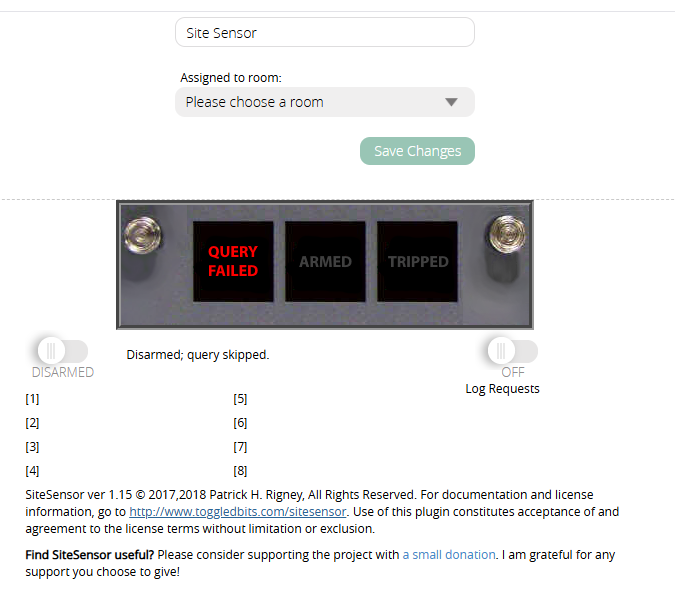
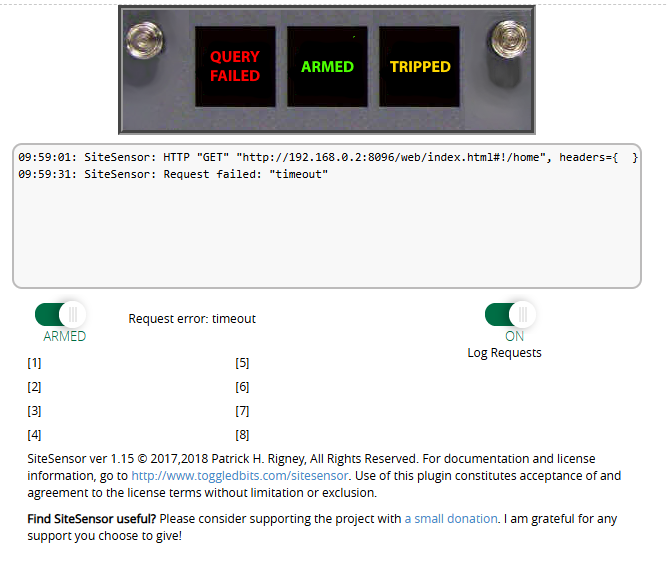
Well that old Vera plugin still seems to work, it took a long time to trigger my new MSR rule however, even with the Site Sensor plugin set to a 60 secs interval. But it did eventually trigger the rule and send a TTS to my Google Home speak saying Emby sever was down.
-
Thanks guys for the suggestions. You are right Home Assistant would be better. I just don't have a lot of time or energy to build a whole system from the ground up myself, which is why I was thinking about Hubitat. I think you can buy some ready made Home Assistant boxes, I've seen some on ebay here in the UK. Might do that or if I can be bothered just build my own etc.
@cw-kid nope, this is an hardware Zwave key from the guys working on home assistant that will work with anything you want and does not require home assistant at all. In fact, we’re running Zwave from ZwaveJS inside our own mini pc, no external hardware needed.
--
On a mission to automate everything. -
@cw-kid nope, this is an hardware Zwave key from the guys working on home assistant that will work with anything you want and does not require home assistant at all. In fact, we’re running Zwave from ZwaveJS inside our own mini pc, no external hardware needed.
@therealdb I'm not sure I understand what ZwaveJS is ?
For example if I bought a mini PC, I would also need a USB Z-Wave stick like the Aeotec or Zooz one and then I'd install Home Assistant OS and tell it to use that Z-Wave stick etc.
So where does ZwaveJS come into play?
Thanks
And I need a recommendation for a Zigbee USB stick as well please. So I can also use Zigbee devices (I don't currently).
-
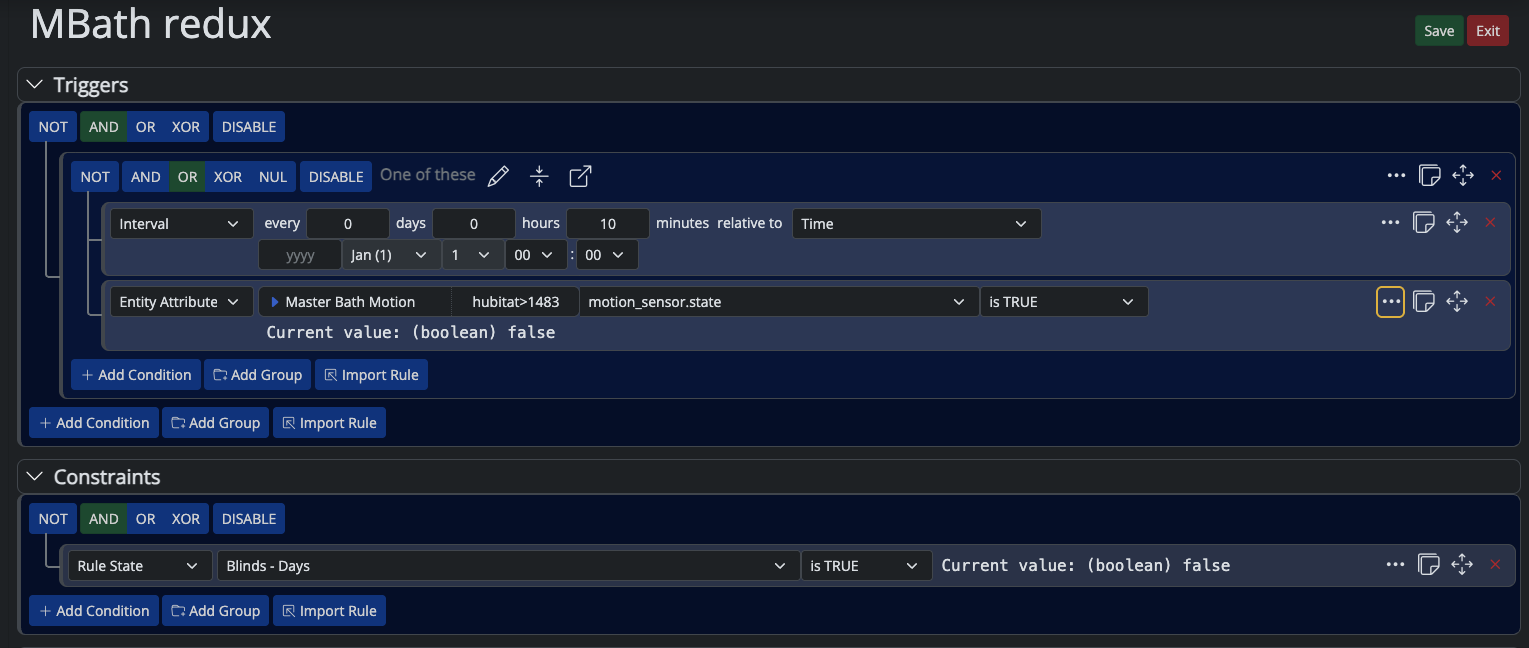
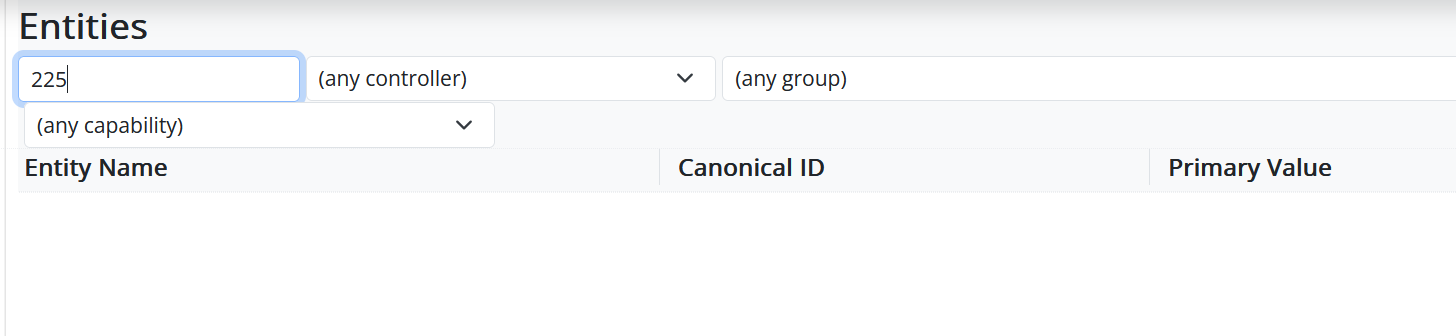
I like the new search feature for rulesets in MSR also! very handy, has helped me find associated rules today about some devices I have removed from one controller and added to a different controller. I could then more easily find such rules and edit their triggers to reflect the device location changes etc. I need to read the MSR release notes to also see what is new and different.
-
@therealdb I'm not sure I understand what ZwaveJS is ?
For example if I bought a mini PC, I would also need a USB Z-Wave stick like the Aeotec or Zooz one and then I'd install Home Assistant OS and tell it to use that Z-Wave stick etc.
So where does ZwaveJS come into play?
Thanks
And I need a recommendation for a Zigbee USB stick as well please. So I can also use Zigbee devices (I don't currently).
@cw-kid ZwaveJS is a piece of software, like reactor, specifically meant to provide Zwave software service. As such, it requires some usb key in order to work. No need to use home assistant. Nabu casa has some hardware as Zwave usb key that’s the best in town at the moment, known as ZWA-2. Together they make the same hw+sw as in Vera or Hubitat, but open and well maintained.
Install Zwave js ui, plug the usb key and you’re ready to go.ZwaveJS UI => https://github.com/zwave-js/zwave-js-ui
Home Assistant ZWA-2 Zwave key => https://www.home-assistant.io/connect/zwa-2/--
On a mission to automate everything. -
@cw-kid ZwaveJS is a piece of software, like reactor, specifically meant to provide Zwave software service. As such, it requires some usb key in order to work. No need to use home assistant. Nabu casa has some hardware as Zwave usb key that’s the best in town at the moment, known as ZWA-2. Together they make the same hw+sw as in Vera or Hubitat, but open and well maintained.
Install Zwave js ui, plug the usb key and you’re ready to go.ZwaveJS UI => https://github.com/zwave-js/zwave-js-ui
Home Assistant ZWA-2 Zwave key => https://www.home-assistant.io/connect/zwa-2/@therealdb OK I think I understand.
So if I had an Aeotec USB stick, I could then use ZwaveJS with that USB stick and ZwaveJS is like the driver / Z-Wave stack software for it then right?
I think I will still need to use Home Assistant as well as they would provide me with the Dashboard interface / app etc.
I will look more into ZWA-2 that you mentioned and learn more.
-
Funny one thing I did have running on an Ezlo hub that worked quite well was their Site Sensor plugin. I used that to tell me if my Emby media sever had gone offline / down. Just installed the Vera Site Sensor plugin instead, which I have never used, trying to figure out how to use it now and see it was written by Patrick!
Well that old Vera plugin still seems to work, it took a long time to trigger my new MSR rule however, even with the Site Sensor plugin set to a 60 secs interval. But it did eventually trigger the rule and send a TTS to my Google Home speak saying Emby sever was down.
@cw-kid said in How to upgrade from an old version of MSR?:
Well that old Vera plugin still seems to work, it took a long time to trigger my new MSR rule however, even with the Site Sensor plugin set to a 60 secs interval. But it did eventually trigger the rule and send a TTS to my Google Home speak saying Emby sever was down.
Since you are hitting an endpoint in your local network, you can shorten the HTTP timeout by setting the
Timeoutvariable on the SiteSensor device.Author of Multi-system Reactor and Reactor, DelayLight, Switchboard, and about a dozen other plugins that run on Vera and openLuup.
-
@cw-kid said in How to upgrade from an old version of MSR?:
Well that old Vera plugin still seems to work, it took a long time to trigger my new MSR rule however, even with the Site Sensor plugin set to a 60 secs interval. But it did eventually trigger the rule and send a TTS to my Google Home speak saying Emby sever was down.
Since you are hitting an endpoint in your local network, you can shorten the HTTP timeout by setting the
Timeoutvariable on the SiteSensor device.@toggledbits ok thanks will try that.
I've currently got the Interval set to 60 secs and the Timeout now at 10 secs.
I just wanted to know if the Emby server goes down as my mum connects to it remotely sometimes and I don't always notice if it's no longer up and running.
Cheers.
-
@therealdb OK I think I understand.
So if I had an Aeotec USB stick, I could then use ZwaveJS with that USB stick and ZwaveJS is like the driver / Z-Wave stack software for it then right?
I think I will still need to use Home Assistant as well as they would provide me with the Dashboard interface / app etc.
I will look more into ZWA-2 that you mentioned and learn more.
@cw-kid exactly. You’ll be able to use in reactor as the entities coming from other controllers, or in home assistant for your dashboards.
--
On a mission to automate everything. -
@cw-kid exactly. You’ll be able to use in reactor as the entities coming from other controllers, or in home assistant for your dashboards.
@therealdb Ok I watched some YouTube videos and understand some more now.
So I could use a Zooz USB Z-Wave controller stick and within Home Assistant you use ZwaveJS addon as the software for adding new Zwave devices and you can also manage your devices by doing firmware updates on them and you can also manage your Z-Wave mesh network and nodes and the routes etc. That all looks pretty cool!
Home Assistant can then be used to create your custom dashboard etc and we can still use MSR to create our logic rules, instead of whatever they tend to use in Home Assistant is? I think they either use Home Assistants inbuilt rules engine or NodeRed right?
Second option is the same as above but instead of using a Zooz USB stick you can use the newish ZWA-2 massive antenna / Z-Wave controller instead also with ZwaveJS addon within Home Assistant etc. For all your existing Z-Wave devices.
If using Z-Wave long range for a particular device then that device talks directly to the ZWA-2 controller and is then not part of the regular Z-Wave mesh network but is then separate.
I think I have a very basic understanding now.
I also need to choose a Zigbee USB stick / controller. I have not looked into that as yet. I do have a few Zigbee devices here but never used them as Vera / Ezlo was crap for Zigbee devices. Even their new Ezlo hub where you could pair Zigbee devices to them, over a period of time those Zigbee devices would just go offline and stop working. So I gave up on using Zigbee and Ezlo never fixed the problem I don't think.
-
@cw-kid,
I ditched my Vera Plus several years ago. I started just by migrating to a Raspberry Pi 4 and Home Assistant, and MSR. Hubitat just for a Z-Wave radio is overkill. I used a Z-Wave USB dongle from Aeotec, but there are others out there (Zooz is inexpensive and actively develops Z-Wave).Now I use a Mini PC, run HA and MSR as VMs on Proxmox, and still use the z-wave dongle. Might want to look into something like that, rather lock yourself into a proprietary ecosystem like Habitat.
@tamorgen said in How to upgrade from an old version of MSR?:
run HA and MSR as VMs on Proxmox
So your running MSR and HA as virtual machines? On Proxmox.
I've never heard of Proxmox before, will have to look into it.
So whats the advantage of running them as virtual machines?
Vs running Home Assistant OS and MSR also running on the same OS (if possible).
Edit: Gemini A.I. told me lol.
Which should you choose for your Mini PC?
Since you're getting a dedicated Mini PC, you have two great paths:The "Easy" Way (Bare Metal): Flash the HAOS image directly onto the Mini PC's hard drive. It turns your Dell/HP/Lenovo into a dedicated "Home Assistant Hub." It’s rock solid and zero maintenance.
The "Pro" Way (Proxmox): Install a hypervisor called Proxmox (which is based on Debian) on the PC first. Then, run HAOS in a Virtual Machine.
Why do this? It allows you to use the leftover power of your Mini PC to run other things (like a media server or a file server) alongside Home Assistant without them interfering with each other.‐--------
So it sounds like if I just use HAOS it's locked down OS and I won't be able to install other things like MSR. So looks like I need to go down the Proxmox route as you suggested.
-
A.I. is pretty good! I don't normally use it tbh. Scared of the future robots gonna rule the world.
I asked:
Yes please tell me more about the general concepts of Proxmox. I do know what virtual machines are however I have used them in the past. But I have never heard of Proxmox before. I am familiar with Debian however I already have a thin client here running Debian and Multi System Reactor aka MSR. MSR is a 3rd party logic rules engine which can be used with your devices in Home Assistant. I need a new setup that allows me to run home assistant and msr on the same pc etc.
It replied but it recommends to run MSR in an LXC rather than a full VM. The whole setup sounds it would be brilliant, but for me to do it, is probably lot of time, learning and head straching lol. So it's gonna be a commitment.
Here is what it said:
Since you are already comfortable with Debian and Virtual Machines, Proxmox is going to feel like a superpower for your home lab.
What is Proxmox?
Proxmox Virtual Environment (PVE) is a Type-1 Hypervisor.
Type-2 (What you've used): Like VirtualBox on Windows. You have an OS, then an app, then the VM.
Type-1 (Proxmox): It is the OS. It sits directly on the "bare metal" hardware.
Crucially for you, Proxmox is built on top of Debian. When you install it, you are essentially installing a highly customized version of Debian with a world-class Web GUI to manage VMs and Containers.
The Strategy: Running HAOS and MSR Together
Since you want to run both Home Assistant and Multi-System Reactor (MSR) on one machine, Proxmox is the perfect "manager" to keep them isolated but interconnected.
1. Home Assistant (The VM)
You will create a Virtual Machine (VM) and install HAOS directly into it.
Why a VM? HAOS wants to "own" the hardware. In a VM, Proxmox gives it a virtualized hard drive and CPU, keeping it stable and allowing for the "Add-on Store" to work perfectly.
Ease of use: There are famous "Helper Scripts" (by tteck) that allow you to install HAOS on Proxmox with a single command.
2. Multi-System Reactor (The LXC Container)
Since MSR is a Node.js application that runs great on Linux, you don't need a full VM for it. You should use a Linux Container (LXC).
What is an LXC? It’s lighter than a VM. It shares the Proxmox (Debian) kernel but has its own file system.
The Benefit: An LXC for MSR will use almost zero idle RAM (around 100-200MB) compared to a full VM which might grab 2GB just to boot.
Why this is better than your current setup:
Snapshots: Before you update Home Assistant or change a massive rule in MSR, you click "Snapshot." If it breaks, you hit "Rollback" and you're back in 10 seconds.
Backups: Proxmox can automatically back up your entire HA setup and MSR setup to an external drive or NAS every night while you sleep.
Hardware Pass-through: If you have a Zigbee or Z-Wave USB stick, Proxmox makes it easy to "pass" that physical USB port into the Home Assistant VM.
The "Debian" Safety Net: Since the base is Debian, you can still SSH into the host and use familiar commands if you ever need to troubleshoot the hardware level.
Recommended "UK eBay PC" Allocation:
If you buy an 8th Gen i5 with 16GB RAM (as discussed):
Proxmox Host: Uses ~1GB RAM.
HAOS VM: Assign 4GB RAM (it will use ~2GB).
MSR LXC: Assign 1GB RAM (it will use ~200MB).
Leftover: You still have 10GB of RAM free to experiment with other things like Pi-Hole, Plex, or a local MQTT broker.
Would you like me to find those "Helper Scripts" for you so you can see how easy the one-command installation is? -
This video is wild and super scary, if real and why I very rarely use A.I.
I'd love to hear you guys opinions as being the expert technical guys you are.
-
Wow Gemini A.i. has it all totally covered lol. I had like an hour long conversation with it. It says it can tell me exactly how to setup such a new HA system step by step and has even come up with a migration plan for my MSR rules!
We are currently talking about building dashboards in HA.
I told it I was currently using Home Remote with Vera and I described my current dashboard menu structure and sub menu structure and how I have a menu item for each room etc.
A.I. is telling me how to do the same in Home Assistant talking about different card options. Its even shown me some HA dashboard demos from YouTube and it says it can "watch" and understand these videos. So if I pick one I like it can then advise me how to build it in Home Assistant.
Witch craft it's just like talking too a human expert.
So think I won't need to ask to many questions on the forum now.
My mind is blown about the A.I. conversation I just had. I've never spoken to them in depth before and not about technical stuff.
I will still be avoiding A.I. in general however.
Humans are totally cooked, we will all be replaced by the robots.
-
Yes to Zwave js ui. Zwa2 range is impressive. You’ll thank me later

There’s zigbee2mqtt that’s basically the same route as Zwave js and home assistant has a zigbee usb key as well.
Everything is then exposed and orchestrated via reactor.Regrading AI, I’m more and more offloading dev tasks to GitHub Copilot Agent inside VS Code and I love it. I have a special chat with custom instructions for reactor where I ask about logic guidance and checks. This is the sort of tasks that generative AI excels at.
-
Couple of observations:
- You don't need to start from ground up HA plays really nicely with MSR and Vera. You can slide over as slowly as you like (I think I was running for nearly 2 years before I got the time to move it all
- I've been playing with AI as well (saves me bugging the brains trust here) Chat GPT and Claude. Although Claude is better they are both wrong FAR MORE often than they are right. I've been through 20+ iterations of code, every time being told 'This will absolutely work' and it doesn't
That's not a massive issue as I sort of know what I'm doing, but I absolutely would not expect any AI at this point to be able to set you up a complete HA set up from scratch.
As for Proxmox it does seem to be very popular. I'm not sure why as it's kind of complex (or looks that way to me after very limited study) I'm running my VMs on my Synology NASs. They are protected on a UPS, and take a snapshot every night. Roll back to a working instance takes minutes if not seconds.
$0.02
C

 Woman Claims "Something Sinister" Is Taking Over The Internet, And It's Crazier Than We Think