Skip to content
  • Categories
  • Recent
  • Tags
  • Popular
  • Unsolved
Collapse
Discussion Forum to share and further the development of home control and automation, independent of platforms.
T

Talisker

@Talisker
Single protocol?
CatmanV2C
Another question to the hive mind. Prompted by the fact that I lost yet another z-wave device over the weekend due to a power issue. It looks like z-way server is reporting another device failed (although it's working fine) and message queue is far too long IMHO. Also the failed device has been removed in the expert interface, but still there in the 'normal' one. Sigh. Currently I have z-wave, Tuya, thinking about Zigbee.... Does anyone use one single protocol for everything? Right now I'm feeling that as the z-wave stuff dies, I'm just gonna replace it with something else.... C
General Discussion
Any thoughts on which is better
CatmanV2C
Obviously a quiet forum, but perhaps it's time I'm looking at rolling Zigbee into my system, in large part for the Aqara FP300 presence sensors which seem to finally provide a solution to if the wasp is actually in the box. My current set up is as follows: One Debian VM on Synology NAS running: Z-wave Server Open Luup Multi system reactor HA bridge Mosquito MQQT broker This machine has a UZB Z-wave stick connected via the USB port on the NAS Another HAOS VM on the same NAS running HAOS I've got some older Z-wave stuff that I keep around until it fails. I have some Tuya stuff integrated in HA My thought was to get either a SMLIGHT SLZB-06M or an Aqara Hub M2 Integrate them via Zigbee2MQQT (running on the Debian machine) and then expose them in HA so I can continue to automate in MSR. Thoughts on which of those devices wold be preferable long term. Both are POE capable which is good. It also appears I could add a USB dongle to the NAS and expose it to the HAOS machine. Any thoughts from the assembled experts here? TIA C
Zigbee
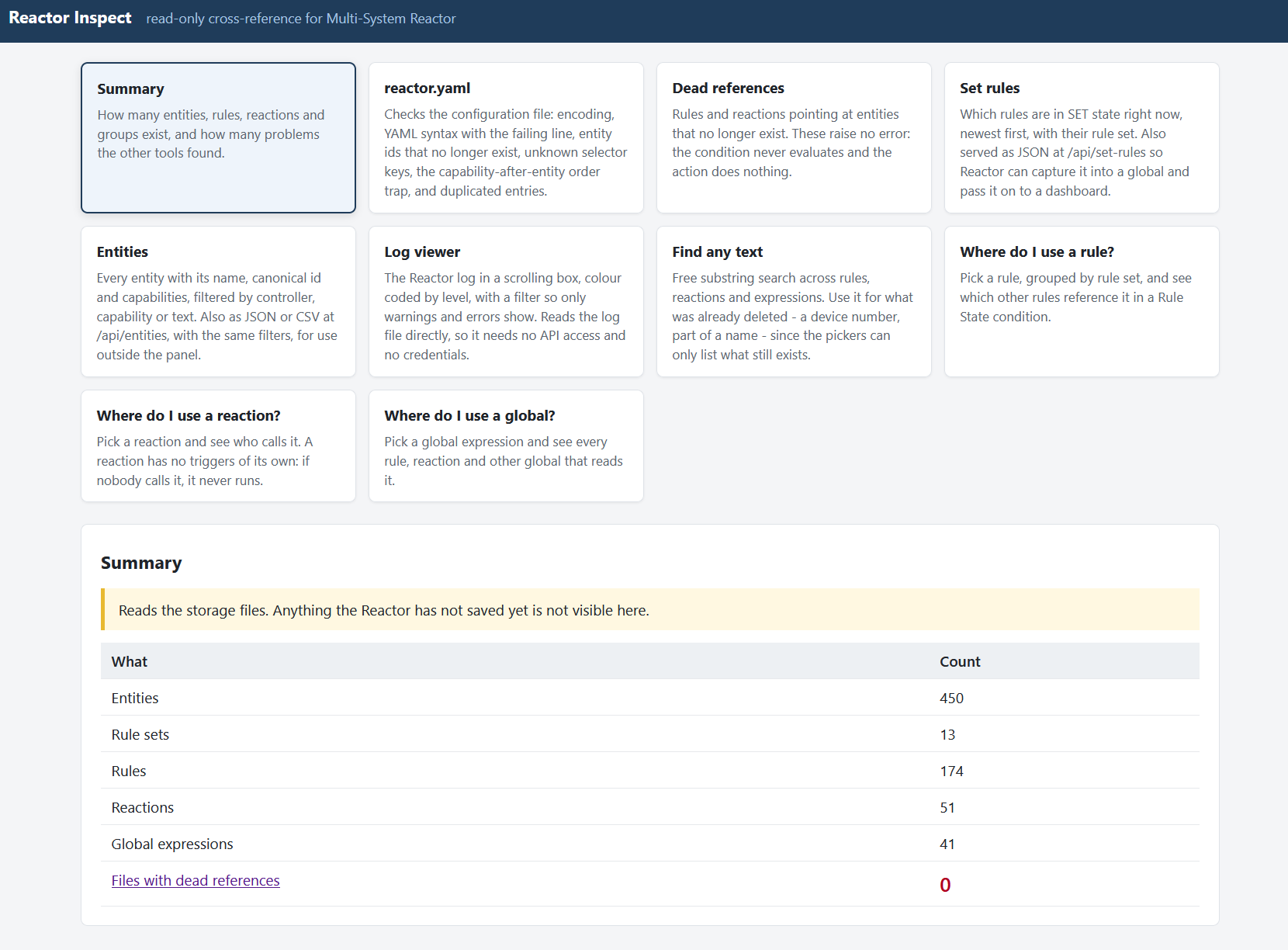
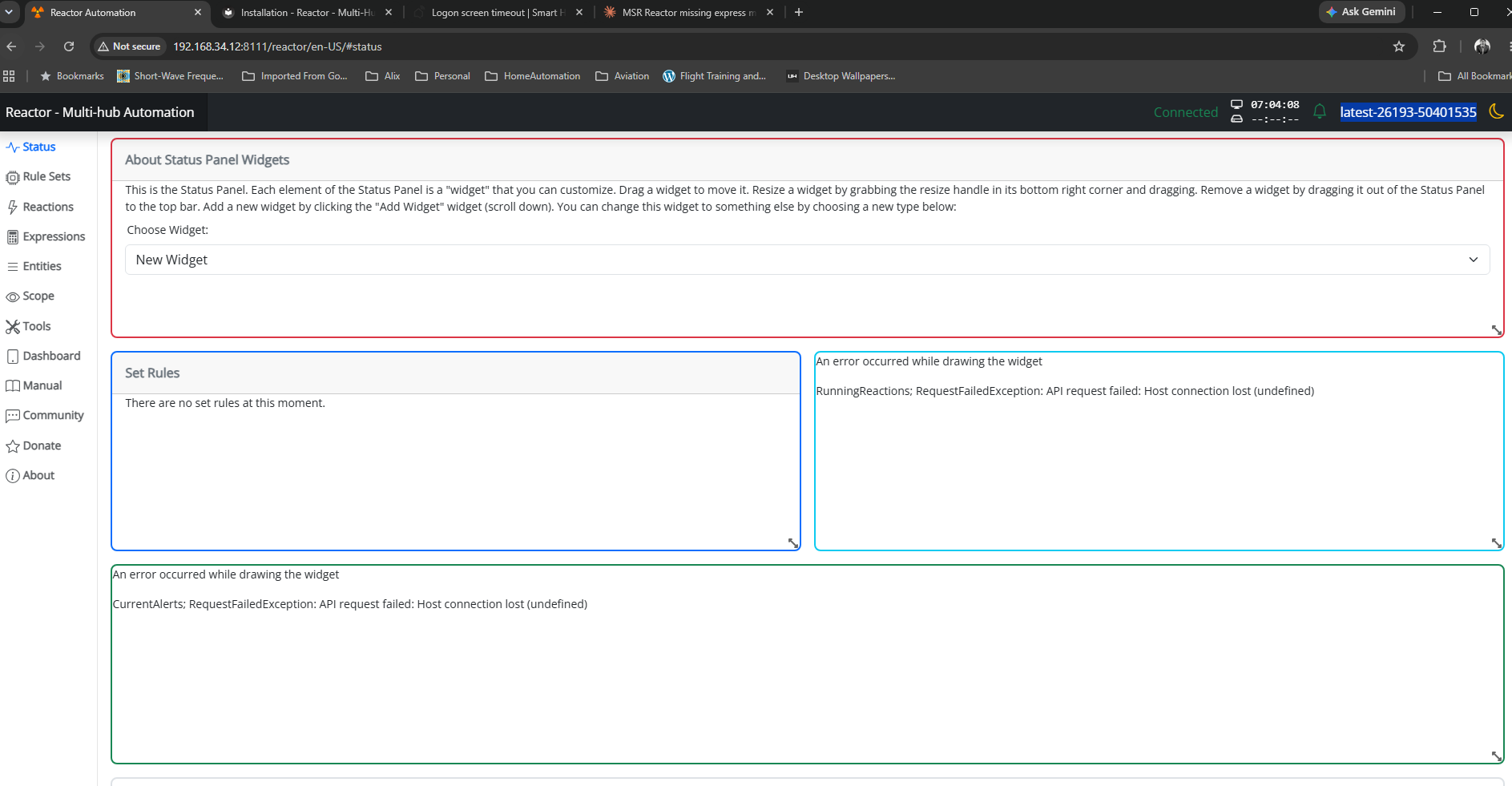
Reactor Loading Screen Safari
S
Topic thumbnail image
Multi-System Reactor
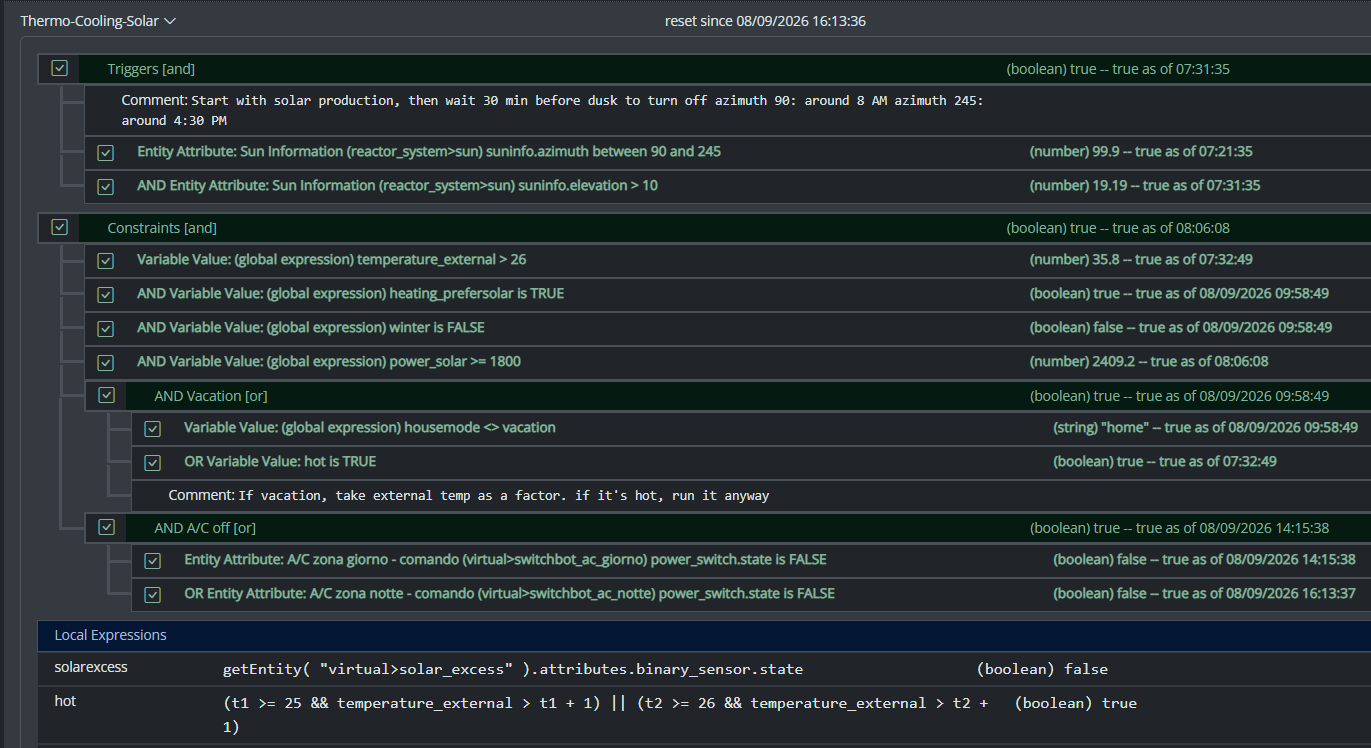
Constraints states visually do not match actual
S
Topic thumbnail image
Multi-System Reactor
Oh the joy of pairing
CatmanV2C
When I remember the old days Just added a new Tuya plug (OK so it's cloud) Start to finish, visible in HA and MSR < 30 seconds... C
Vera
HDMI oddness
CatmanV2C
Not really Smart Home stuff, but going to ask as we have smart people... Bear with me on this one. Asking here because of the font of knowledge! For many eek years I have had a Virgin V6 box and a Raspberry Pi running Kodi connected to my TV through a cheap *** HDMI switch. It all worked beautifully but the absolutely critical thing was that the TV remote passed the signals back to the Pi to allow remote control of Kodi. Couple of changes of late: Installed a soundbar on the TV using the ARC (audio return channel). That then turns the soundbar on and off when the TV turns on and off and the TV volume control controls the soundbar volume direct. Everything continues to work Upgraded the software of the Tivo box to Virgin 360. This is literally software only. You get sent a snacky new Bluetooth remote hit 'upgrade' on the screen and off it goes. Now, things are not playing well. Typically when I turn on to watch Kodi the soundbar comes on (as it should) but the TV either puts out sound through its own speakers and the soundbar, or just the soundbar. It's not possible to control the volume of the soundbar through the TV. Also it's not longer possible to control Kodi using the TV remote. If I turn the TV360 box off, i.e. power it down, before turning on to watch Kodi, everything is fine. This makes little to no sense to me. My assumption is that the cheap *** HDMI switch is getting something from the TV360 connection that it didn't used to get when the software was Tivo and that's screwing up the HDMI communications. I'm upgrading the switch to something a little less chap, but wondered if anyone could validate my theory at all? TIA C
General Discussion
Home Assistant Connect ZWA-2 & ZBT-2
therealdbT
Topic thumbnail image
Hardware
[MSR] Feature request: For Each action on arrays/groups
therealdbT
Topic thumbnail image
Multi-System Reactor
[Solved] Error: Command timeout
G
at _ClientAPI._commandTimeout (http://192.168.1.100:8111/client/ClientAPI.js:807:179 Seeing this randomly when returning to open browser tab after being away awhile. Once, maybe twice a day. "What did you do to trigger it?" Literally nothing, just walked away and returned and there it was. Actions taken in reasonably close proximity to this particular instance of it popping up: I'd restarted the MSR container in Portainer. I'll try to grab some logs here shortly.
Multi-System Reactor
Issue with MSR UI becoming unresponsive
S
I'm having an issue with MSR's UI being very unresponsive. It started happening a couple days ago and I didn't make any changes that would have caused this except adding some meross lan devices in HA. When I go into an entity action and use the search functionality, it usually will start filtering and then get to a place after a few letters are entered where it will take 30 seconds or more (sometimes minutes) for the UI to show what I am typing. During this time MSR ui is completely unresponsive. I've tried multiple browsers and multiple computers. HA and MSR are both deployed in docker. I have run HTOP on the host and when the problem happens there are no CPU/Memory spikes at all. From a functionality standpoint MSR is working perfectly. This seems to be an UI issue only. Do i need to ditch Docker and run MSR on a Proxmox VM? I have both stand alone Docker and Proxmox environments. I dont mind doing that I just want to be able to use the UI again... Installation method Home Assistant Container Core 2025.7.3 Frontend 20250702.3 nothing crazy in the logs except some openweather map stuff that doesn't make any sense as it is working fine in MSR Any help would be greatly appreciated Reactor latest-25328-b2ed1365 app 25328 configuration from /var/reactor/config NODE_PATH /opt/reactor:/opt/reactor/node_modules [latest-25328]2025-11-30T20:01:53.843Z <app:null> Reactor build latest-25328-b2ed1365 starting on v24.11.1 /usr/local/bin/node [latest-25328]2025-11-30T20:01:53.844Z <app:null> Process ID 1 user/group 0/0; docker; platform linux/x64 #161-Ubuntu SMP Tue Jul 22 14:25:40 UTC 2025; locale (undefined) [latest-25328]2025-11-30T20:01:53.844Z <app:null> Basedir /opt/reactor; data in /var/reactor/storage [latest-25328]2025-11-30T20:01:53.844Z <app:null> NODE_PATH=/opt/reactor:/opt/reactor/node_modules [latest-25328]2025-11-30T20:01:53.865Z <app:null> Resolved timezone=America/New_York, environment TZ=America/New_York; offset minutes from UTC=-300 [latest-25328]2025-11-30T20:01:53.867Z <default:null> Module i18n v25141 [latest-25328]2025-11-30T20:01:53.867Z <app:null> Configured locale (undefined); selected locale(s) en-US.UTF-8 [latest-25328]2025-11-30T20:01:53.879Z <app:null> Loaded locale en-US for en-US [latest-25328]2025-11-30T20:01:53.879Z <app:null> Local date/time using configured timezone and locale formatting is "11/30/2025, 3:01:53 PM" [latest-25328]2025-11-30T20:01:53.889Z <Structure:null> Module Structure v25326 [latest-25328]2025-11-30T20:01:53.890Z <Capabilities:null> Module Capabilities v24312 [latest-25328]2025-11-30T20:01:53.904Z <Plugin:null> Module Plugin v25141 [latest-25328]2025-11-30T20:01:53.923Z <Timer:null> Module Timer v25279 [latest-25328]2025-11-30T20:01:53.924Z <TimerBroker:null> Module TimerBroker v25314 [latest-25328]2025-11-30T20:01:53.927Z <Entity:null> Module Entity v25251 [latest-25328]2025-11-30T20:01:53.929Z <Controller:null> Module Controller v25253 [latest-25328]2025-11-30T20:01:53.930Z <AlertManager:null> Module AlertManager v25318 [latest-25328]2025-11-30T20:01:53.937Z <default:null> Module Ruleset v25283 [latest-25328]2025-11-30T20:01:53.937Z <default:null> Module Rulesets v25141 [latest-25328]2025-11-30T20:01:53.942Z <GlobalExpression:null> Module GlobalExpression v25258 [latest-25328]2025-11-30T20:01:53.953Z <Predicate:null> Module Predicate v25328 [latest-25328]2025-11-30T20:01:53.956Z <Rule:null> Module Rule v25323 [latest-25328]2025-11-30T20:01:53.958Z <GlobalReaction:null> Module GlobalReaction v25292 [latest-25328]2025-11-30T20:01:53.959Z <Engine:null> Module Engine v25325 [latest-25328]2025-11-30T20:01:53.964Z <httpapi:null> Module httpapi v25328 [latest-25328]2025-11-30T20:01:53.972Z <wsapi:null> Module wsapi v25328 [latest-25328]2025-11-30T20:01:53.994Z <TaskQueue:null> Module TaskQueue 24138 [latest-25328]2025-11-30T20:01:53.994Z <VeraController:null> Module VeraController v25141 [latest-25328]2025-11-30T20:01:54.179Z <HassController:null> Module HassController v25325 [latest-25328]2025-11-30T20:02:13.797Z <OWMWeatherController:null> Module OWMWeatherController v25268 [latest-25328]2025-11-30T20:02:13.800Z <SystemController:null> Module SystemController v25323 [latest-25328]2025-11-30T20:02:13.807Z <MQTTController:null> Module MQTTController v22092 [latest-25328]2025-11-30T20:02:20.630Z <OWMWeatherController:CRIT> FetchError: request to https://api.openweathermap.org/data/2.5/weather?lat=xxxxxxxxxx&lon=-xxxxxxxxx&appid=xxxxxxxxxxxxxxxxxxxxxxxxxx&units=standard&_r=1xxxxxxxxxxxxxxfailed, reason: [-] FetchError: request to https://api.openweathermap.org/data/2.5/weather?lat=xxxxxxxxxxx&lon=-xxxxxxxxxxxxxxxxxx&appid=xxxxxxxxxxxxxxxxxxx&units=standard&_r=xxxxxxxxxxxxxxxfailed, reason: at ClientRequest.<anonymous> (/opt/reactor/node_modules/node-fetch/lib/index.js:1501:11) at ClientRequest.emit (node:events:508:28) at ClientRequest.emit (node:domain:489:12) at emitErrorEvent (node:_http_client:108:11) at TLSSocket.socketErrorListener (node:_http_client:575:5) at TLSSocket.emit (node:events:508:28) at TLSSocket.emit (node:domain:489:12) at emitErrorNT (node:internal/streams/destroy:170:8) at emitErrorCloseNT (node:internal/streams/destroy:129:3) at processTicksAndRejections (node:internal/process/task_queues:89:21
Multi-System Reactor
Date/time condition
tunnusT
Topic thumbnail image
Multi-System Reactor
Is there a way to turn this section (image in post) off?
toggledbitsT
Topic thumbnail image
Comments & Feedback
Device log?
G
@toggledbits is there a log that will show me what rule is turning on a specific device? I've got a switch that has been kicking on at 2200 ET for several nights now and the reactor.log doesn't have a thing in it that I can see on a device level (it being more rules-based).
Multi-System Reactor
Midnight crossing not working in date/time condition (build 25325)
tunnusT
Topic thumbnail image
Multi-System Reactor
Reactor (Multi-System/Multi-Hub) Announcements
toggledbitsT
Build 21228 has been released. Docker images available from DockerHub as usual, and bare-metal packages here. Home Assistant up to version 2021.8.6 supported; the online version of the manual will now state the current supported versions; Fix an error in OWMWeatherController that could cause it to stop updating; Unify the approach to entity filtering on all hub interface classes (controllers); this works for device entities only; it may be extended to other entities later; Improve error detail in messages for EzloController during auth phase; Add isRuleSet() and isRuleEnabled() functions to expressions extensions; Implement set action for lock and passage capabilities (makes them more easily scriptable in some cases); Fix a place in the UI where 24-hour time was not being displayed.
Multi-System Reactor
[Solved] Local expression in Rule does not evaluate as they used to do
CrilleC
Topic thumbnail image
Multi-System Reactor
Home Assistant 2025.11.2 and latest-25315
CrilleC
Topic thumbnail image
Multi-System Reactor
Notice to Docker + ARM Users (RPi 3/4/5 and others)
toggledbitsT
This post does not apply to users of Intel/AMD-based systems. If you are using a Reactor image tagged latest-amd64 or stable-amd64, then this post does not apply to you. It also does not apply to bare-metal installs; it's for users of docker images on ARM-based systems only (principally Raspberry Pi hosts, but could be others). After January 15, 2026, I will no longer produce the aarch64-tagged docker image for Reactor. The ARM images will be arm64 for 64-bit operating systems, and armv7l for 32-bit operating systems. For those of you running a container from the aarch64 image today, this will be a relatively simple change: you just need to switch the image used for your docker container to a differently-tagged image. If you are using docker-compose, then this is a relatively simple matter of changing the image line in your docker-compose.yaml file and then stopping (docker-compose down) and restarting (docker-compose up -d) your Reactor daemon. But there's a catch... not all of you can safely just switch from the aarch64 image to the arm64 image. And, you can't just trust the output of uname -m, for example, because this exposes the CPU architecture, but not the word size of the OS running on that CPU. For Raspberry Pi systems, the transition to 64-bit operating systems was long (starting in 2016) and not always obvious — although there was a first "official" 64-bit OS for RPis in 2020, it did not become a default recommendation in the Raspberry Pi Imager until 2021, and then that was only the default for Pi 3/4 systems with >4GB RAM; it was 2022 before it was universally recommended for all 64-bit CPUs regardless of RAM size. Depending on when you first imaged your RPi system and what default you may have been offered/chosen, you could today easily have a 64-bit CPU Raspberry Pi running a 32-bit version of the operating system. Upgrades along the way would not change this; changing it to fully 64-bit requires a full reimage of the system. To establish if your OS is 64- or 32-bit, log in to your Pi and run: sudo dpkg-architecture -q DEB_HOST_ARCH. If the response is arm64 or aarch64, then you are running a 64-bit OS and you should use the arm64-tagged image. If it's anything else, you are running a 32-bit OS, and you should use the armv7l-tagged image. pi@rpi4-1:~ $ sudo dpkg-architecture -q DEB_HOST_ARCH armhf pi@rpi4-1:~ $ uname -m aarch64 pi@rpi4-1:~ $ In the example above, the uname command reports that the CPU is 64-bit architecture (aarch64), which is true for the host on which I ran these commands, but the DEB_HOST_ARCH value is armhf, indicating a 32-bit operating system. This system has to use the armv7l-tagged image. Other systems will have their own ways of determining the word size of the running OS. Since the majority of Reactor users running ARM systems are on Raspberry Pis, I am able to supply the above instructions, but if you happen to have a different ARM system, you'll need to do some web searching to figure out how to expose that information. Or, you can just try the arm64 image, and if it doesn't start up, try the armv7l image. Remember to always back up your system before making any changes. For everyone, please make this change as soon as possible, and if you have any trouble finding a working image, please (1) go back to the current aarch64 image; and (2) let me know in this thread along with as much detail about your host system as you can offer (including the output of the dpkg-architecture command mentioned above).
Multi-System Reactor
Requesting a proper ARM64/aarch64 Docker image (Pi 5 support)
M
Hi, I'm in the process of migrating from a Raspberry Pi 4 (ARMv7) to a Raspberry Pi 5 (ARMv8/aarch64), but I’ve run into an issue: there is no proper ARMv8/aarch64 image available. None of the existing images run on the Pi 5 - they all exit immediately with code 139 (segmentation fault), which typically indicates that the binaries inside the image are not compatible with the ARM64/aarch64 architecture used by the Pi 5. Would it be possible to publish a correct ARMv8/aarch64 (linux/arm64) image? Building one should be relatively straightforward using docker buildx with multi-arch support. For example, my own Node.js images are built this way: docker buildx build --push \ -t <localrepo>/<project>:<tag> \ --platform=linux/arm64,linux/amd64 \ --file ./apps/<project>/Dockerfile . This produces both the AMD64 and ARM64/v8 variants automatically. Also, as a side note, it may be best to avoid using Alpine as the base image for the ARM64 build, since musl-based builds often cause compatibility issues and unnecessary headaches. A glibc-based base image (e.g., Debian or Ubuntu) tends to work far more reliably on ARM64, especially for Node.js applications. @toggledbits - tagging you in case you missed this. Thanks, mgvra
Multi-System Reactor
Script action and custom timers
therealdbT
Sorry to write here without trying, but I’m flying today. Am I correct if i say that script action with alarm() makes it possible to execute a reaction in a given interval, lets say 15 seconds or 3.5 minutes? That sounds amazing, since I’ve used weird tricks, including a custom controller, just to do this.
Multi-System Reactor
About
Posts
47
Topics
9
Shares
0
Groups
0
Followers
0
Following
0

Posts

Recent Best Controversial

  • New HA instance
    T Talisker

    @CatmanV2 what device (hub) fo you use to connect your z-wave devices? I'm using my old vera but at some point I need to decide what to replace it with. I agree with your comment about the strengths of HA and MSR.

    Home Assistant

  • Critical Disk Space Warning
    T Talisker

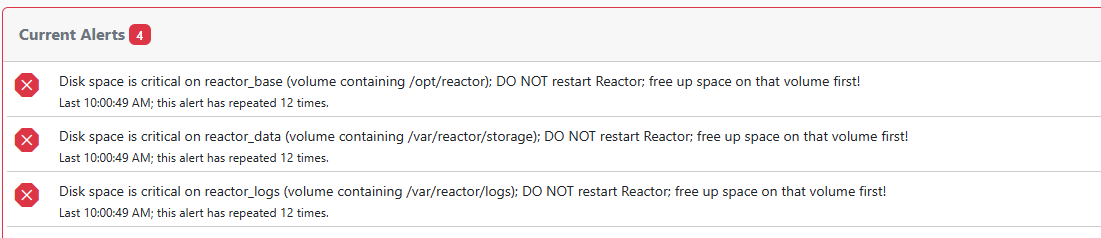
    I updated to the latest version of Reactor this morning. I run reactor (successfully) on a Raspberry PI 4 4GB with SSD 64GB. I also run Home Assistant in Docker. After updating I noticed a disk space critical error warning!

    9f4e1ea1-977a-481b-9806-d3d43a4eff04-image.png

    I have tried purging the docker install (docker image prune -a)

    I have rebooted the Raspberry PI also, and the error messages keep coming.

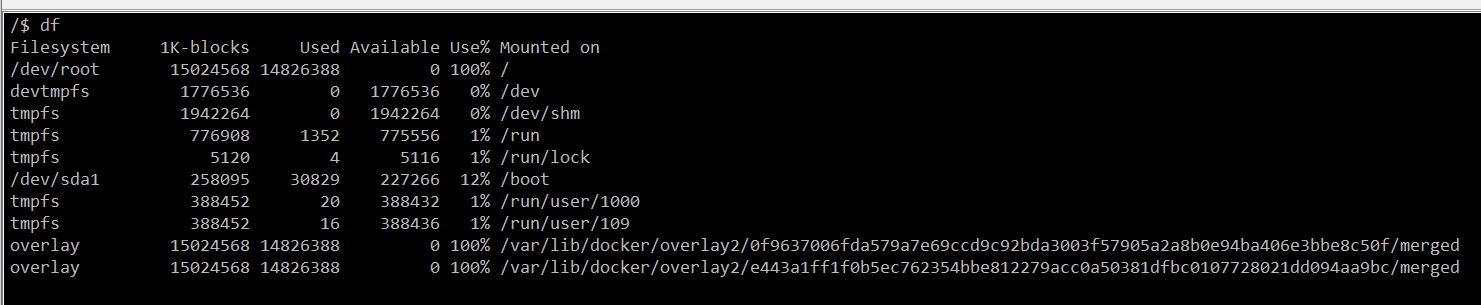
    I have the following disk space:

    58742ed7-e10d-4572-b380-0abda64f90b4-image.png

    How do I free up space?

    Any help would be appreciated.

    Multi-System Reactor

  • MSR setup for http request (today's date)
    T Talisker

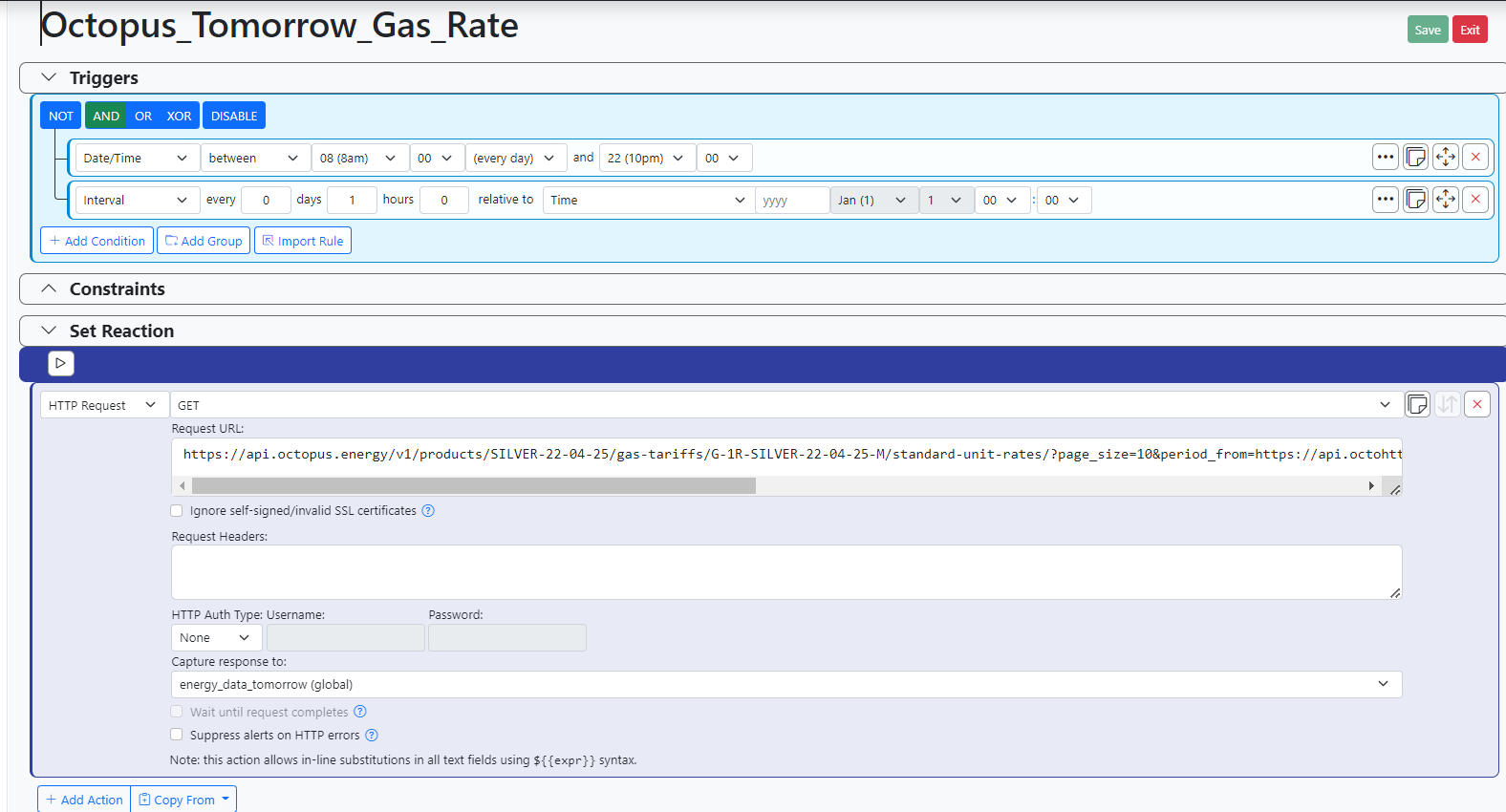
    @toggledbits 2aae465d-b404-43f1-babe-0f12435a73eb-image.png

    No Reset Reaction or Local Expressions are set.

    The request URL is:
    https://api.octopus.energy/v1/products/SILVER-22-04-25/gas-tariffs/G-1R-SILVER-22-04-25-M/standard-unit-rates/?page_size=10&period_from=https://api.octohttps://api.octopus.energy/v1/products/SILVER-22-04-25/gas-tariffs/G-1R-SILVER-22-04-25-M/standard-unit-rates/?page_size=10&period_from=${{Tomorrow_Date}}&order_by=period

    Multi-System Reactor

  • MSR setup for http request (today's date)
    T Talisker

    @toggledbits Thanks for your pointers. Partial success:
    6df6b31f-039d-4fd6-9c8d-15784218cbe4-image.png

    However, the expressions do not update! I use Tomorrow_Date in a Rule (HTTP Request):

    https://api.octopus.energy/v1/products/SILVER-22-04-25/gas-tariffs/G-1R-SILVER-22-04-25-M/standard-unit-rates/?page_size=10&period_from=https://api.octohttps://api.octopus.energy/v1/products/SILVER-22-04-25/gas-tariffs/G-1R-SILVER-22-04-25-M/standard-unit-rates/?page_size=10&period_from=**${{Tomorrow_Date}}**&order_by=period

    Is there a way to force an update on selected expressions, say at a set time every day?

    Multi-System Reactor

  • MSR setup for http request (today's date)
    T Talisker

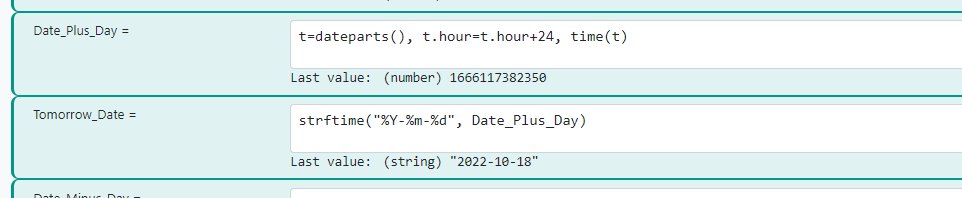
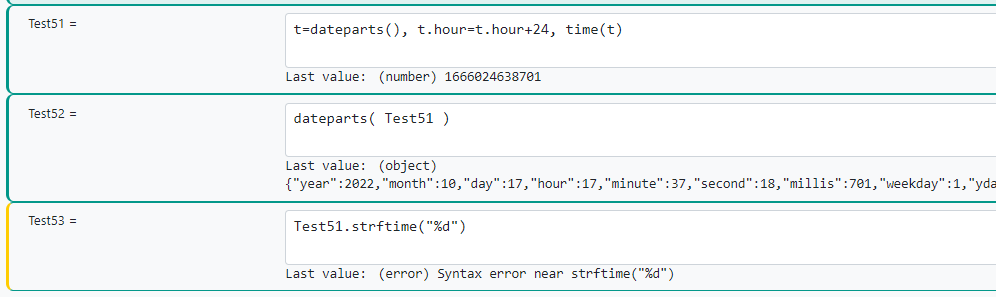
    @toggledbits Thanks for the prompts, following which I made some progress:
    6f968ae5-b0b6-4d54-9b46-6441c90cf73e-image.png

    I have Test51 which contains tomorrow's date, but I am struggling to get the time in a sting representation. I am trying to represent the day in Test53 expression but I have a syntax error.

    I would appreciate some more guidance.

    Multi-System Reactor

  • MSR setup for http request (today's date)
    T Talisker

    Background to the question
    I've been experimenting a little and I need help. If I use the following expression:

    03c304e5-fbfb-4895-9147-7ef0ea1d6592-image.png

    I get the correct response (i.e. today's day number '16'th).

    I can use this in a HTTP requst to download some tarrif information via an API from my energy supplier - i.e. today's gas unit rate tariff

    What I'd like to do

    I would like to download tomorrow's gas unit rate tariff. To do this I need to set up and expression with today's date + 1 day (in the case of my example expression above that would be '17' (today being the 16th).

    Question: How do I take today's date and add 1 day - so that I can make the HTTP request for tomorrow's information?

    Any guidance or suggestions would be appreciated.

    Multi-System Reactor

  • Reactor not showing full vera device parameters
    T Talisker

    So, I have found my missing parameters! They appeared following a reactor update. Perhaps next time I add new vera devices, I should stop reactor and re-start it after I have added the new devices and things have settled down. Anyhow, thanks again for your assitance Patrick.

    Multi-System Reactor

  • Reactor not showing full vera device parameters
    T Talisker

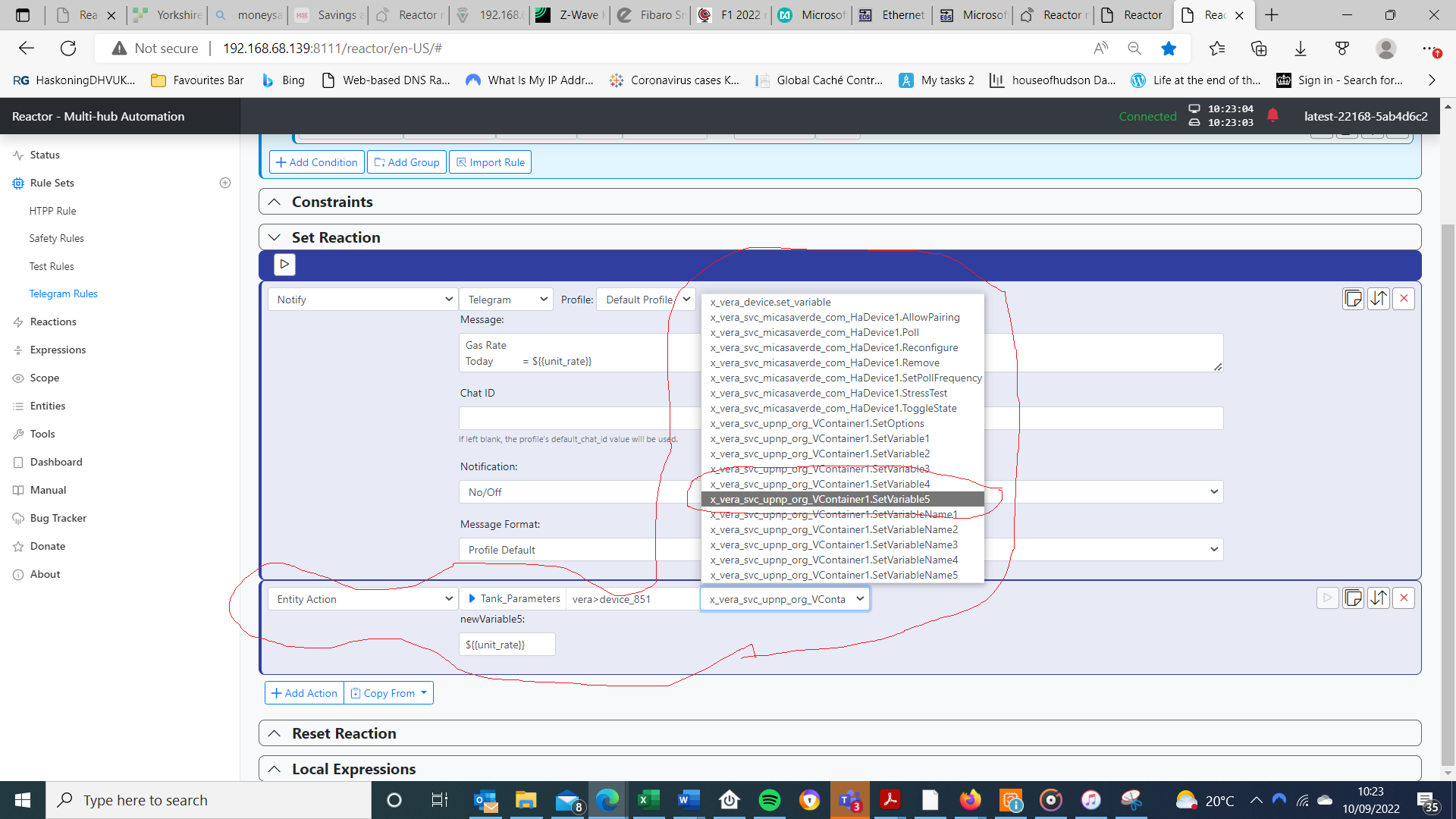
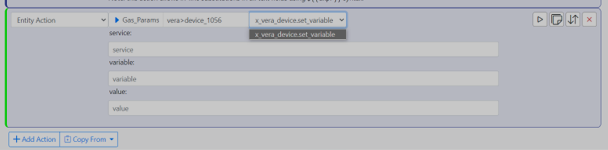
    I have a number of rules which using entity actions I write values into multistring devices in my vera plus. Below is an example of how I do this in Reactor:

    Untitled.png

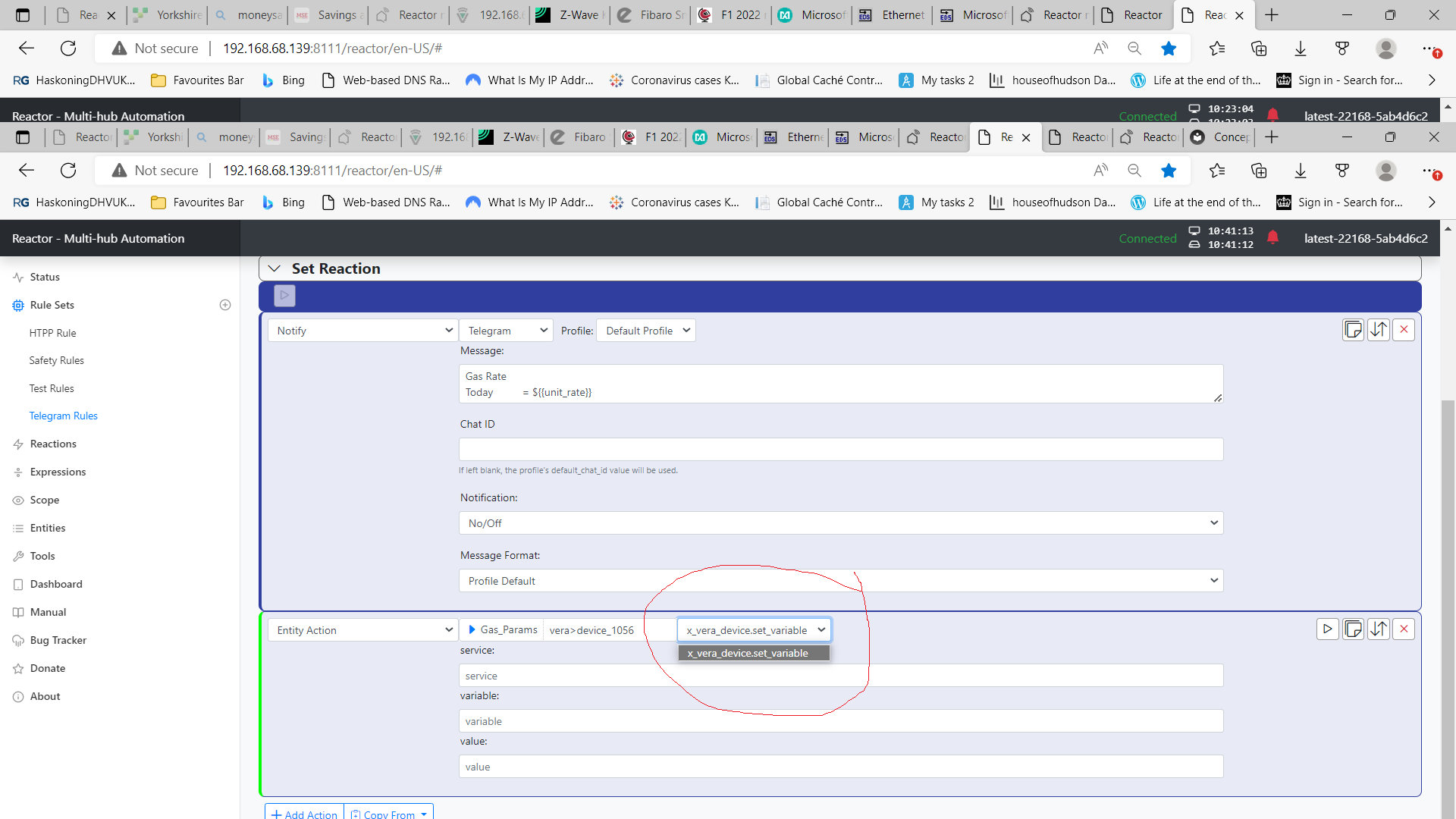
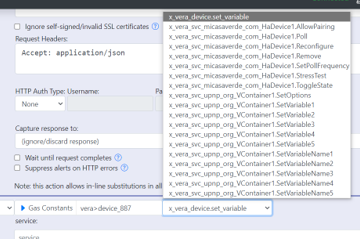
    If I add a new multistring device in my vera plus I cannot set the device variables as I can with 'old' multistring devices. The below screen shot shows that the same drop down menu options in reactor for the new multistring device are not present as they are for the old device above:

    Untitled.png

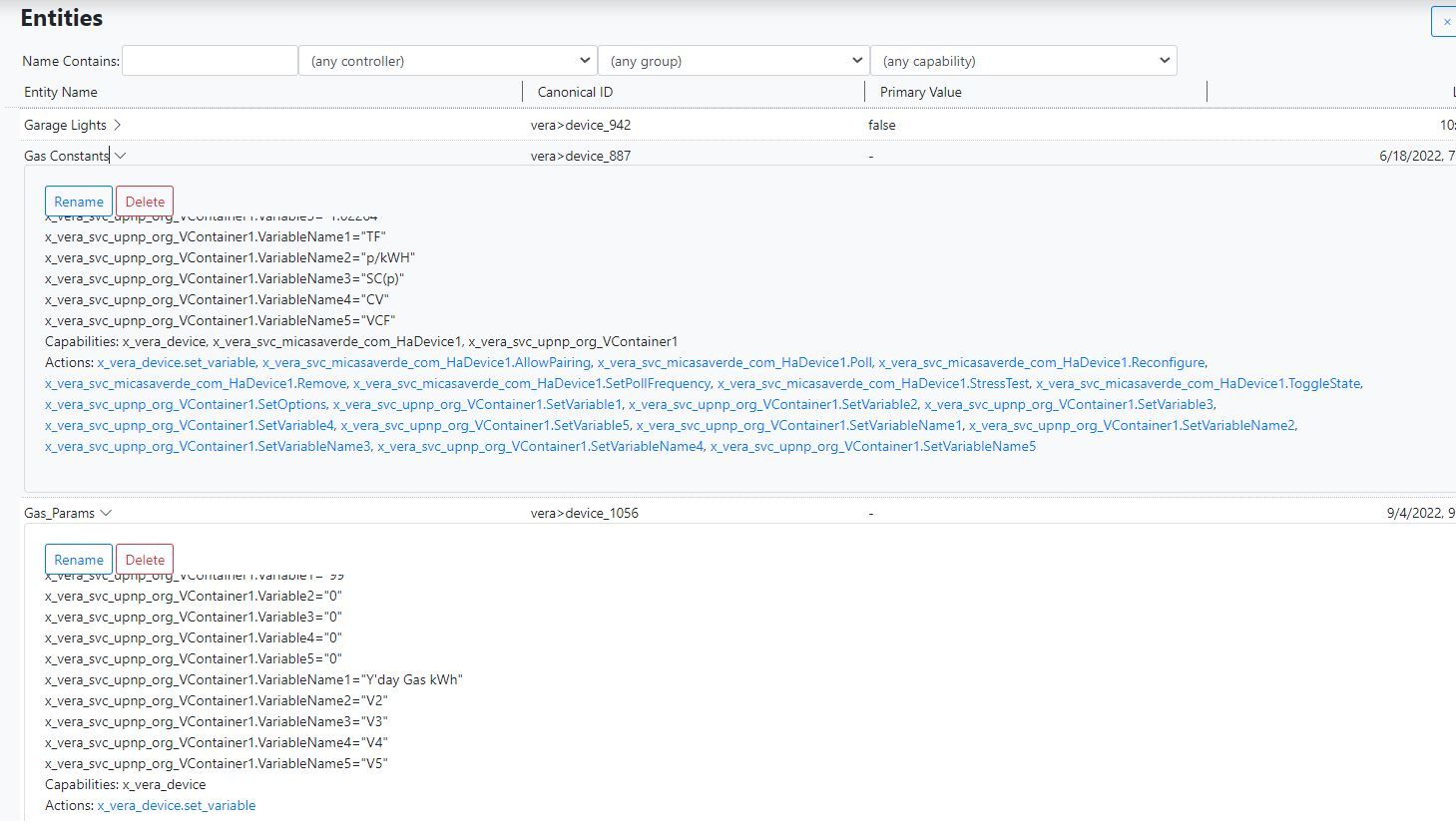
    If I look at the reactor entities for an old multistring entity (device #887) and a newly created multistring entity (device number '1056) I can spot a difference as per the screen shot below. I guess my question is 'why are the available actions not listed for new multistring devices (entities))?

    Capture.JPG

    Multi-System Reactor

  • Reactor not showing full vera device parameters
    T Talisker

    @toggledbits it appears that I used the wrong terminology. I have looked at the two Reactor logs (vera-user_data-initial.json and vera-status-initial.json files) again, comparing the attributes for 1056 and 1057 against other devices, the respective attributes don't seem out of place. All attributes are listed for the two multistring devices (or should I say they appear to be listed). See below for device 1056. Does this confirm that the attributes for the two new entities (devices) are being read correctly by reactor?

    vera-status-initial.json

    {
    "id": 1056,
    "states": [
    {
    "id": 334,
    "service": "urn:upnp-org:serviceId:VContainer1",
    "variable": "VariableName1",
    "value": "Y'day Gas kWh"
    },
    {
    "id": 335,
    "service": "urn:upnp-org:serviceId:VContainer1",
    "variable": "Variable1",
    "value": "99"
    },
    {
    "id": 336,
    "service": "urn:upnp-org:serviceId:VContainer1",
    "variable": "VariableName2",
    "value": "V2"
    },
    {
    "id": 337,
    "service": "urn:upnp-org:serviceId:VContainer1",
    "variable": "Variable2",
    "value": "0"
    },
    {
    "id": 338,
    "service": "urn:upnp-org:serviceId:VContainer1",
    "variable": "VariableName3",
    "value": "V3"
    },
    {
    "id": 339,
    "service": "urn:upnp-org:serviceId:VContainer1",
    "variable": "Variable3",
    "value": "0"
    },
    {
    "id": 340,
    "service": "urn:upnp-org:serviceId:VContainer1",
    "variable": "VariableName4",
    "value": "V4"
    },
    {
    "id": 341,
    "service": "urn:upnp-org:serviceId:VContainer1",
    "variable": "Variable4",
    "value": "0"
    },
    {
    "id": 342,
    "service": "urn:upnp-org:serviceId:VContainer1",
    "variable": "VariableName5",
    "value": "V5"
    },
    {
    "id": 343,
    "service": "urn:upnp-org:serviceId:VContainer1",
    "variable": "Variable5",
    "value": "0"
    },
    {
    "id": 344,
    "service": "urn:upnp-org:serviceId:VContainer1",
    "variable": "Options",
    "value": ""
    },
    {
    "id": 345,
    "service": "urn:micasaverde-com:serviceId:HaDevice1",
    "variable": "Configured",
    "value": "0"
    }

    vera-user_data-initial.json:

    {
    "id": 1056,
    "device_type": "urn:schemas-upnp-org:device:VContainer:1",
    "id_parent": 0,
    "embedded": 0,
    "disabled": 0,
    "device_file": "D_MString.xml",
    "manufacturer": "",
    "model": "",
    "altid": "",
    "ip": "",
    "mac": "",
    "time_created": "1662320801",
    "plugin": "8231",
    "states": [
    {
    "service": "urn:upnp-org:serviceId:VContainer1",
    "variable": "VariableName1",
    "value": "Y'day Gas kWh",
    "id": 0
    },
    {
    "service": "urn:upnp-org:serviceId:VContainer1",
    "variable": "Variable1",
    "value": "99",
    "id": 1
    },
    {
    "service": "urn:upnp-org:serviceId:VContainer1",
    "variable": "VariableName2",
    "value": "V2",
    "id": 2
    },
    {
    "service": "urn:upnp-org:serviceId:VContainer1",
    "variable": "Variable2",
    "value": "0",
    "id": 3
    },
    {
    "service": "urn:upnp-org:serviceId:VContainer1",
    "variable": "VariableName3",
    "value": "V3",
    "id": 4
    },
    {
    "service": "urn:upnp-org:serviceId:VContainer1",
    "variable": "Variable3",
    "value": "0",
    "id": 5
    },
    {
    "service": "urn:upnp-org:serviceId:VContainer1",
    "variable": "VariableName4",
    "value": "V4",
    "id": 6
    },
    {
    "service": "urn:upnp-org:serviceId:VContainer1",
    "variable": "Variable4",
    "value": "0",
    "id": 7
    },
    {
    "service": "urn:upnp-org:serviceId:VContainer1",
    "variable": "VariableName5",
    "value": "V5",
    "id": 8
    },
    {
    "service": "urn:upnp-org:serviceId:VContainer1",
    "variable": "Variable5",
    "value": "0",
    "id": 9
    },
    {
    "service": "urn:upnp-org:serviceId:VContainer1",
    "variable": "Options",
    "value": "",
    "id": 10
    }
    ],
    "impl_file": "I_MString.xml",
    "ControlURLs": {
    "service_514": {
    "service": "urn:upnp-org:serviceId:VContainer1",
    "ControlURL": "/upnp/control/dev_514",
    "EventURL": "/upnp/event/dev_514",
    "serviceType": "urn:schemas-upnp-org:service:VContainer:1"
    }
    },
    "device_json": "D_MString.json",
    "name": "Gas_Params",
    "room": "11",
    "local_udn": "uuid:4d494342-5342-5645-0420-000002fc93e7"
    },

    Multi-System Reactor

  • Reactor not showing full vera device parameters
    T Talisker

    Please find my responses below. I fear you may be frustraited by my lack of knowlege but I have done my best based on your guidance. I am not able to upload the logs. Do you need these?

    Sorry about the thumbnail screen shots - I could not find a better way to capture them!

    'I would look at the attributes listed for the entities in the Entities list.' So the unreadable thumbnail images showed that the expected entities for the two new vera multistring devices are not available in Reactor.

    I have looked at the vera logs (http://192.168.XX.XXX/cgi-bin/cmh/log.sh?Device=LuaUPnP after a luup reload. If I search for the two new multistring devices (1056 & 1057) the entries looked quite normal compared to the log entries for similar devices. So I assume no vera error?

    I have looked at the two Reactor logs (vera-user_data-initial.json and vera-status-initial.json files) again, comparing the entries for 1056 and 1057 against other devices, the respective lines don't seem out of place. All entities are listed for the two multistring devices.

    Multi-System Reactor

  • Reactor not showing full vera device parameters
    T Talisker

    Yes Patrick. I also tried an alternative browser. Tried a hard re-boot also on my Pi4.

    Multi-System Reactor

  • Reactor not showing full vera device parameters
    T Talisker

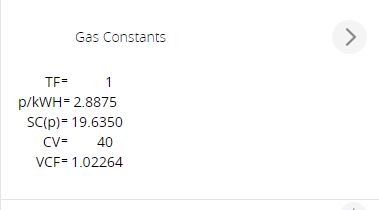
    I use a number of multistring devices in my vera plus. My 'original' multistring devices work in Reactor i.e.:

    9c5203dd-1993-4b5b-aeee-44377c1ee1c5-image.png

    42b97524-9428-4222-a3fb-ce4e0009c00b-image.png

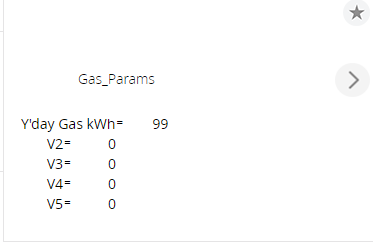
    However, the new ones I have added do not show the device data sets / parameters (not sure what the correct term is?):

    a54ddf29-ea32-47c9-906e-260a25dcb482-image.png

    3efa1d0a-5466-4220-93d3-0a67da42a5d0-image.png

    Is there something that I am doing wrong?

    Multi-System Reactor

  • MSR setup for http request (today's date)
    T Talisker

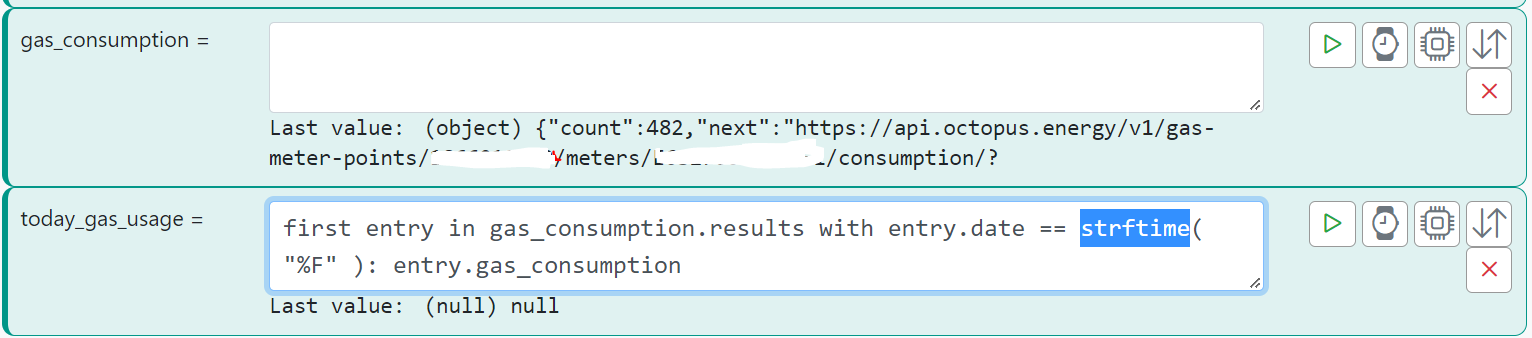
    I have made an http request and get the following JSON response which I have stored in a global variable gas_consumption (like the example above). See below.

    I have then tried to the following expression to extract the consumption value:

    0818a20e-2700-4a4c-a9be-47a64f452051-image.png

    Clearly the returned data "results" is not published for today (strftime( "%F) i.e. 4/9/2022.

    How do I extract the gas consumption for a particular date?
    How do I extract yesterday's gas consumption (in the case of the response below 3/9/2022)?

    ===group

    {
    	"count": 482,
    	"next": "https://api.octopus.energy/v1/gas-meter-points/xxxxxxxxxxx/meters/xxxxxxxxxxx/consumption/?format=json&group_by=day&page=2&page_size=10",
    	"previous": null,
    	"results": [{
    		"consumption": 0.0,
    		"interval_start": "2022-09-03T00:00:00+01:00",
    		"interval_end": "2022-09-03T01:00:00+01:00"
    	}, {
    		"consumption": 1.077,
    		"interval_start": "2022-09-02T00:00:00+01:00",
    		"interval_end": "2022-09-03T00:00:00+01:00"
    	}, {
    		"consumption": 0.669,
    		"interval_start": "2022-09-01T00:00:00+01:00",
    		"interval_end": "2022-09-02T00:00:00+01:00"
    	}, {
    		"consumption": 0.761,
    		"interval_start": "2022-08-31T00:00:00+01:00",
    		"interval_end": "2022-09-01T00:00:00+01:00"
    	}, {
    		"consumption": 0.614,
    		"interval_start": "2022-08-30T01:00:00+01:00",
    		"interval_end": "2022-08-31T00:00:00+01:00"
    	}, {
    		"consumption": 0.0,
    		"interval_start": "2022-08-29T00:00:00+01:00",
    		"interval_end": "2022-08-29T01:00:00+01:00"
    	}, {
    		"consumption": 0.569,
    		"interval_start": "2022-08-28T00:00:00+01:00",
    		"interval_end": "2022-08-29T00:00:00+01:00"
    	}, {
    		"consumption": 0.0,
    		"interval_start": "2022-08-27T00:00:00+01:00",
    		"interval_end": "2022-08-28T00:00:00+01:00"
    	}, {
    		"consumption": 0.455,
    		"interval_start": "2022-08-26T00:00:00+01:00",
    		"interval_end": "2022-08-27T00:00:00+01:00"
    	}, {
    		"consumption": 0.681,
    		"interval_start": "2022-08-25T00:00:00+01:00",
    		"interval_end": "2022-08-26T00:00:00+01:00"
    	}]
    }
    
    ===
    Multi-System Reactor

  • MSR setup for http request (today's date)
    T Talisker

    @toggledbits thank you once again! Very clear instructions. I am now up an running and have opened up new opportunites to extend my automation.

    Multi-System Reactor

  • MSR setup for http request (today's date)
    T Talisker

    @toggledbits I am not sure if the returned result is JSON? I can obviously paste the response into a JSON formatter but I guess that is not the same thing? The result is unfortunately not just the 'latest' (today's rate), but a whole history of days which means I'd have to pick out the values under each day or today '2022-07-25'

    https://octopus.energy/api/v1/tracker/G-1R-SILVER-2017-1-M/daily/past/90/1/?format=json

    Multi-System Reactor

  • MSR setup for http request (today's date)
    T Talisker

    I would like to extract the daily gas price from my fuel supplier's API. The http call is as follows: https://octopus.energy/api/v1/tracker/G-1R-SILVER-2017-1-M/daily/past/90/1/

    I need to pick the current (i.e. today's) gas price. If I search through the text manually I can find today's data, in this case 2022-07-20.

    Can I set MSR up to do a http request and then extract the "unit_rate" into a variable so that I can set another rule up to determine if it would be cheaper to heat my hot water using the immersion heater or gas (FYI my off peak electricity price is £0.075 per kwh). Any help or guidance as always is much appreciated.

    I'm running MSR on raspberry PI 4 in docker version 22168

    Thanks.

    {
    		"date": "2022-07-20",
    		"market_index": 62.8463,
    		"cost": 15.094631164947945,
    		"standing_charge": 15.0885,
    		"unit_rate": 8.211,
    		"usage": 0.0007467013698630137,
    		"unit_charge": 0.0061311649479452055,
    		"breakdown": {
    			"unit_charge": {
    				"Wholesale cost": 6.28463,
    				"Environmental & social obligations": 0.0,
    				"Delivery & networks": 0.9681,
    				"100% green": 0.0,
    				"Administration, financing & margin": 0.56727,
    				"VAT": 0.391
    			},`
    Multi-System Reactor

  • Copying configuraiton and rules from QNAP install to Raspberry PI 4 install
    T Talisker

    Sorry @toggledbits . I tied it again after a good break and it appears to work fine. I honestly don't know what was going wrong but things seem to now be in order:

    pi@raspberrypi:~ $ cd reactor
    pi@raspberrypi:~/reactor $ ls
    config docker-compose.yml logs storage
    pi@raspberrypi:~/reactor $ docker-compose down
    Stopping reactor ... done
    Removing reactor ... done
    Removing network reactor_default
    pi@raspberrypi:~/reactor $ docker-compose pull
    Pulling reactor ... done
    pi@raspberrypi:~/reactor $ docker-compose up -d
    Creating network "reactor_default" with the default driver
    Creating reactor ... done

    docker-compose.yml below FYI:

    Multi-System Reactor template docker-compose.yml (version 22160)

    Change the lines indicated by "DO"...

    version: '3'

    services:
    reactor:
    container_name: reactor
    environment:
    # DO change the TZ: line to set your local time zone.
    # See valid TZ list: https://en.wikipedia.org/wiki/List_of_tz_database_time_zones
    TZ: GB
    #
    # DO NOT change this path. Your directory location is in "source" below.
    REACTOR_DATA_PREFIX: /var/reactor

    # DO change the image below to the one you are using (e.g. armv7l or aarch64 for RPi 4)
    image: toggledbits/reactor:latest-aarch64
    
    restart: "always"
    expose:
      - 8111
    ports:
      - 8111:8111
    volumes:
        # DO change the /home/username/reactor below to the directory you created for
        # your local data; DO NOT change the /var/reactor part
      - /home/pi/reactor:/var/reactor
      - /etc/localtime:/etc/localtime:ro
    tmpfs: /tmp
    
    Multi-System Reactor

  • Copying configuraiton and rules from QNAP install to Raspberry PI 4 install
    T Talisker

    @toggledbits something is not working quite right with my docker install (docker-compose). Not sure where to start!

    815c9e37-4c43-42dc-b343-258a9016cff8-image.png

    Multi-System Reactor

  • Copying configuraiton and rules from QNAP install to Raspberry PI 4 install
    T Talisker

    @toggledbits thanks for the methodology. I manged to copy the files from a usb stick to the relevant folders using the sudo cp command. Feeling pretty pleased as I am now up an running on my raspberry pi.

    Multi-System Reactor

  • Copying configuraiton and rules from QNAP install to Raspberry PI 4 install
    T Talisker

    @catmanv2 I tried that thanks and it works:

    sudo docker stop reactor #stops reactor
    sudo service docker restart #starts reactor

    Cheers!

    Multi-System Reactor
  • Login

  • Don't have an account? Register

  • Login or register to search.
  • First post
    Last post
0
  • Categories
  • Recent
  • Tags
  • Popular
  • Unsolved