Skip to content
  • Categories
  • Recent
  • Tags
  • Popular
  • Unsolved
Collapse
Discussion Forum to share and further the development of home control and automation, independent of platforms.
wmarcolinW

wmarcolin

@wmarcolin
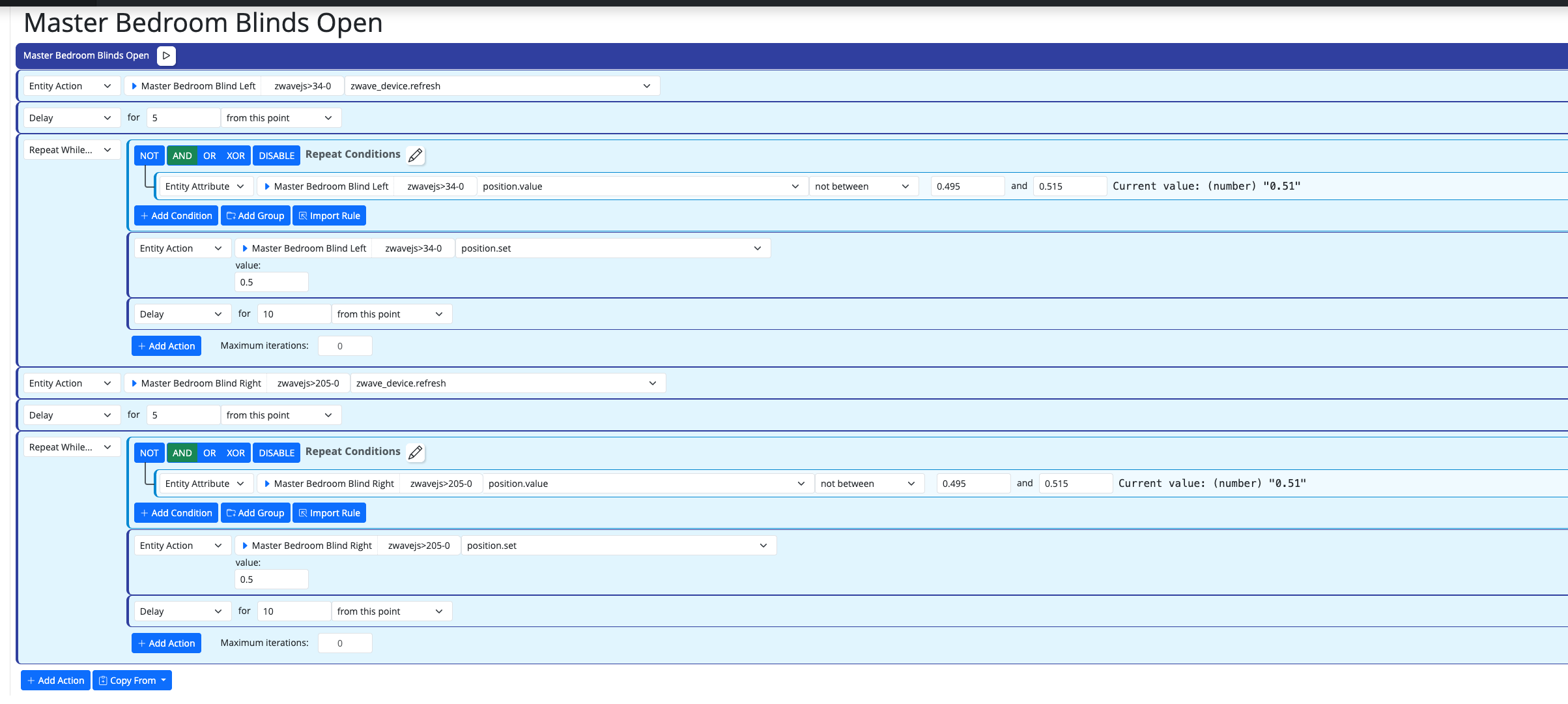
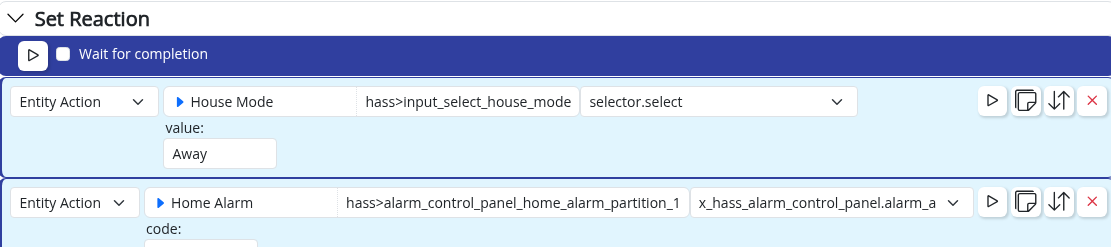
Set reaction triggering wrong z-wave device
T
Topic thumbnail image
Multi-System Reactor
Can you run MSR on Home Assistant OS ?
cw-kidC
Looking at using Home Assistant for the first time, either on a Home Assistant Green, their own hardware or buying a cheap second hand mini PC. Sounds like Home Assistant OS is linux based using Docker for HA etc. Would I also be able to install things like MSR as well on their OS ? On the same box? Thanks.
Multi-System Reactor
RPi Alternative: Orange Pi 4 LTS (3GB RAM/16GB eMMC)
toggledbitsT
The last of four boards I'm trying in this batch is the Orange Pi 4 LTS. I purchased a 3GB RAM + 16GB eMMC model from Amazon for $83, making it the most costly of the four boards tried, but still well under my US$100 limit. This board is powered by a Rockchip RK3399-T processor, ARM-compatible with dual Cortex-A72 cores and quad Cortex-A53 cores at 1.6Ghz (1.8Ghz for the 4GB model); compare this to the RPi 3B+ with four Cortex-A53 and the RPi 4B with four Cortex-A72, this board is a hybrid that I would expect to stand in the performance middle between the two RPi models. It's available in 3GB and 4GB DDR4 RAM configurations, with and without 16GB eMMC storage. It has a MicroSDHC slot, gigabit Ethernet, WiFi and BT, two USB 2.0 type A ports, one USB 3.0 type C port, a mini PCIe ribbon-cable connector (requires add-on board for standard connector), two each RPi-compatible camera and LCD ports, HDMI type A, and can be powered (5VDC/3A) via USB-C or DC type C (3.8mm OD/1.1mm ID) jack (center-positive), an odd and perhaps unwelcome departure from the more common type A (5.5mm/2.1mm). A serial port for console/debug can be connected by using a (not included) USB-TTL adapter (3.3V) via pin headers like the Orange Pi Zero 2. The included dual-band antenna connects via U.FL connector to the board, so it's easy substituting for another if you prefer. The manufacturer recommends use of a heat sink (which was included in the box). A metal cooling case is also offered by the manufacturer (a bundle with the metal case and a power supply is sold on Amazon for $90 as of this writing). The Orange Pi 4 LTS is somewhat longer than the RPi 4B, and although the boards are the same width, the mounting hole placement is different both in length and (oddly) width. Between this and the differences in connector locations, neither board is a drop-in replacecment for the other and their respective cases are not interchangeable. The 26-pin header is a subset of the RPi 4B's 40-pin header, so some HATs for the RPi may work (although the mounting hole differences will make securing them "interesting"), and some HATs will surely not. Models with eMMC storage have an OS installed and boot immediately with SSH daemon running and ready for login. Mine was running Debian Bullseye, which would probably be fine for most users. It had clearly been on there a while, because it needed a lot of updates, but it's a current distro, so you're running out of the box with something that will last. A different OS can be installed by downloading an image (once again I chose Ubuntu Jammy) and writing it to a MicroSD card, then booting the system from the SD card. You can either leave the system in that state (running the OS from the SD card), or copy the OS from the SD card to the eMMC. The latter is done by a script; documentation for the process is best described in the downloadable PDF User Manual. This took about 10 minutes and went smoothly, and I was able to boot the system without the SD card after the process completed. I have lingering questions around the value of the eMMC storage. It's definitely faster than using MicroSD or USB-based storage (I got 311MB/s average on a 4GB write, compared to MicroSD performance around 15MB/s), but it would take a long-term test of this product to determine if the on-board eMMC option has the stamina to take the write counts typical of Linux systems, and if its wear-leveling and error correction are sufficient to assure a long, error-free life. Given the high premium apparently being paid for including eMMC on the board, it should be fast and durable, but only time and experience (perhaps painful) would tell the latter. A careful configuration with other Flash-friendly filesystems could be used to reduce wear, but this is an advanced configuration/cookbook topic and beyond the scope of this writing. This question is also not unique to eMMC — MicroSD cards are also known to fail with high write cycles, so the use of a "high endurance" product is recommended for any and all systems using MicroSD as primary storage. The board has Mini PCIe capability, and that may be a storage alternative, but read on... Also bear in mind that the eMMC storage is fixed-size forever; it cannot be expanded, and 16GB can run out pretty quickly these days. Users of MicroSD cards for primary storage can upgrade to bigger cards, but when users of eMMC primary storage outgrow it, the only choice is to add a MicroSD card or other "external" storage to the system, move part of the filesystem to it, and then manage both storage devices and deal with the limitations and risks of both. As I mentioned with the Orange Pi Zero 2, if you are going to use this board as a home automation controller/gateway or similar role, it should (IMO) have a battery-backed real time clock (RTC), and Orange Pi offers an add-on module that connects directly to the 26-pin header on the board. An available expansion board provides a standard Mini PCIe interface and SIM card slot (hmm...), but it connects to the main board via a short ribbon cable, and its mounting holes have no complement on the main board, so it seems like it would be a fragile dangly thing that's a nuisance to deal with. I want to like this board more, and it's very capable, but I'm concerned about value. The limited options for eMMC (16GB or none), the question mark of the eMMC's longevity vs cost, the strange DC power connector choice, the lack of 40-pin GPIO on a full-size (plus) board, the inconsistent hole placement, and the fragile Mini PCIe arrangement, are all "cons" that devalue this board in my view. The price point is clearly driven by the additional capabilities of the board (camera support, ports, six core CPU, extra RAM, on-board eMMC storage), but unfortunately, a great many of these features may not be useful for home automation, and therefore potentially a waste of money. In terms of overall value, I still believe the Libre "Le Potato" seems a better choice to me, and the Orange Pi Zero 2 (very) a close second, but I'll admit I'm focused on a particular application and your needs may be better suited to what this board offers than mine. Passmark Results: OrangePi 4 LTS Cortex-A72 (aarch64) 6 cores @ 1200 MHz | 2.9 GiB RAM Number of Processes: 6 | Test Iterations: 1 | Test Duration: Medium -------------------------------------------------------------------------- CPU Mark: 583 Integer Math 12037 Million Operations/s Floating Point Math 2542 Million Operations/s Prime Numbers 4.5 Million Primes/s Sorting 3141 Thousand Strings/s Encryption 153 MB/s Compression 4049 KB/s CPU Single Threaded 154 Million Operations/s Physics 80.5 Frames/s Extended Instructions (NEON) 244 Million Matrices/s Memory Mark: 498 Database Operations 551 Thousand Operations/s Memory Read Cached 2524 MB/s Memory Read Uncached 2602 MB/s Memory Write 3182 MB/s Available RAM 1947 Megabytes Memory Latency 119 Nanoseconds Memory Threaded 6243 MB/s --------------- eMMC storage write 311MB/s average for 4GB; MicroSD (Samsung 32GB class 10) storage write 15MB/s.
SBC
RPi Alternative: Orange Pi Zero 2 (1GB)
toggledbitsT
Topic thumbnail image
SBC
RPi Alternative: Libre Computer AML-S905X-CC "Le Potato" (2GB RAM)
toggledbitsT
With Raspberry Pi boards continuing to be relatively scarce, I've been trying a few alternatives to see what may be usable and good. I had previously written about the Jetson Nano 2GB, which is great, but a little pricey, so I'm trying to find sub-US$100 boards that will run Reactor. I've got four that I'm trying now, but one in particular goes right to work in the most predictable way and seems worth a mention immediately: the Libre Computer Board AML-S905X-CC 2GB (known as "Le Potato"). The form factor is very similar to that of the Raspberry Pi 3 B+, and has comparable CPU (ARM Cortex-A53, quad 64-bit cores at 1.5+GHz -- slightly higher clock speed). It's US$35 on Amazon and LoverPi in the (recommended) 2GB configuration, and easy to get. Startup is like RPi: download one of the available OS images (Ubuntu, Raspbian, Debian, ARMbian, etc.) from their site and write the image to a MicroSD card, insert into slot, power up, and off you go. I tried the Ubuntu 22.04 image first and it comes right up. No problem getting nodejs 18.12.1 installed and running (with Reactor). No WiFi on board, but I don't see that as a minus for use as a controller/hub (which should be hard-wired, IMO). The 40-pin GPIO connector is compatible with typical RPi HATs (PoE, breakouts, etc.). There is an available eMMC (solid state storage) module to use instead of MicroSD, which I would recommend for long-term use. It runs US$25 for 32GB (64GB and 128GB available). The module is scarcely larger than the chip it carries, and has the smallest board-to-board connector I've ever seen. Next up: ESPRESSObin 2GB (spoiler: it's... technical...)
SBC
HA and AI
CatmanV2C
Having hours of (actually quite fun) interaction with AI (Chat GPT) making up dashboards and sensors for HA. It's OK (well it's better than I am!) but it makes soooo many mistakes. Gets there in the end though, if you've half a clue (which I do half the time) C
Home Assistant
How to upgrade from an old version of MSR?
cw-kidC
Hello I haven't updated my installation of MSR in a very long time. Its a bare metal Linux install currently on version 24366-3de60836 I see the latest version is now latest-26011-c621bbc7 I assume I cannot just jump from a very old version to the latest version? Or can I? Thanks
Multi-System Reactor
This trigger no longer working - complaining about the operator needing changing
cw-kidC
Topic thumbnail image
Multi-System Reactor
Self test
CatmanV2C
Having been messing around with some stuff I worked a way to self trigger some tests that I wanted to do on the HA <> MSR integration This got me wondering if there's an entity that changes state / is exposed when a configured controller goes off line? I can't see one but thought it might be hidden or something? Cheers C
Multi-System Reactor
Access control - allowing anonymous user to dashboard
tunnusT
Using build 25328 and having the following users.yaml configuration: users: # This section defines your valid users. admin: ******* groups: # This section defines your user groups. Optionally, it defines application # and API access restrictions (ACLs) for the group. Users may belong to # more than one group. Again, no required or special groups here. admin_group: users: - admin applications: true # special form allows access to ALL applications guests: users: "*" applications: - dashboard api_acls: # This ACL allows users in the "admin" group to access the API - url: "/api" group: admin_group allow: true log: true # This ACL allows anyone/thing to access the /api/v1/alive API endpoint - url: "/api/v1/alive" allow: true session: timeout: 7200 # (seconds) rolling: true # activity extends timeout when true # If log_acls is true, the selected ACL for every API access is logged. log_acls: true # If debug_acls is true, even more information about ACL selection is logged. debug_acls: true My goal is to allow anonymous user to dashboard, but MSR is still asking for a password when trying to access that. Nothing in the logs related to dashboard access. Probably an error in the configuration, but help needed to find that. Tried to put url: "/dashboard" under api_acls, but that was a long shot and didn't work.
Multi-System Reactor
VEC Virtual Switch Auto Off
S
I use Virtual Entity Controller virtual switches which I turn on via webhooks from other applications. Once a switch triggers and turns on, I can then activate associated rules. I would like each virtual switch to automatically turn off after a configurable time (e.g., 5 seconds, 10 seconds). Is there a better way to achieve this auto-off behavior instead of creating a separate rule for each switch that uses the 'Condition must be sustained for' option to turn it off? With a large number of these switches (and the associated turn-off rules), I'm checking to see if there is a simpler approach.If not, could this be a feature request to add an auto-off timer directly to the virtual switches. Thanks Reactor (Multi-hub) latest-26011-c621bbc7 VirtualEntityController v25356 Synology Docker
Multi-System Reactor
Upcoming Storage Change -- Got Back-ups?
toggledbitsT
TL;DR: Format of data in storage directory will soon change. Make sure you are backing up the contents of that directory in its entirety, and you preserve your backups for an extended period, particularly the backup you take right before upgrading to the build containing this change (date of that is still to be determined, but soon). The old data format will remain readable (so you'll be able to read your pre-change backups) for the foreseeable future. In support of a number of other changes in the works, I have found it necessary to change the storage format for Reactor objects in storage at the physical level. Until now, plain, standard JSON has been used to store the data (everything under the storage directory). This has served well, but has a few limitations, including no real support for native JavaScript objects like Date, Map, Set, and others. It also is unable to store data that contains "loops" — objects that reference themselves in some way. I'm not sure exactly when, but in the not-too-distant future I will publish a build using the new data format. It will automatically convert existing JSON data to the new format. For the moment, it will save data in both the new format and the old JSON format, preferring the former when loading data from storage. I have been running my own home with this new format for several months, and have no issues with data loss or corruption. A few other things to know: If you are not already backing up your storage directory, you should be. At a minimum, back this directory up every time you make big changes to your Rules, Reactions, etc. Your existing JSON-format backups will continue to be readable for the long-term (years). The code that loads data from these files looks for the new file format first (which will have a .dval suffix), and if not found, will happily read (and convert) a same-basenamed .json file (i.e. it looks for ruleid.dval first, and if it doesn't find it, it tries to load ruleid.json). I'll publish detailed instructions for restoring from old backups when the build is posted (it's easy). The new .dval files are not directly human-readable or editable as easily as the old .json files. A new utility will be provided in the tools directory to convert .dval data to .json format, which you can then read or edit if you find that necessary. However, that may not work for all future data, as my intent is to make more native JavaScript objects directly storable, and many of those objects cannot be stored in JSON. You may need to modify your backup tools/scripts to pick up the new files: if you explicitly name .json files (rather than just specifying the entire storage directory) in your backup configuration, you will need to add .dval files to get a complete, accurate backup. I don't think this will be an issue for any of you; I imagine that you're all just backing up the entire contents of storage regardless of format/name, that is the safest (and IMO most correct) way to go (if that's not what you're doing, consider changing your approach). The current code stores the data in both the .dval form and the .json form to hedge against any real-world problems I don't encounter in my own use. Some future build will drop this redundancy (i.e. save only to .dval form). However, the read code for the .json form will remain in any case. This applies only to persistent storage that Reactor creates and controls under the storage tree. All other JSON data files (e.g. device data for Controllers) are unaffected by this change and will remain in that form. YAML files are also unaffected by this change. This thread is open for any questions or concerns.
Multi-System Reactor
Oddness in Copy/Move of Reactions
G
Topic thumbnail image
Multi-System Reactor
[Solved] function isRuleEnabled() issue
CrilleC
Topic thumbnail image
Multi-System Reactor
[Reactor] Problem with Global Reactions and groups
therealdbT
Topic thumbnail image
Multi-System Reactor
Possible feature request 2?
CatmanV2C
Just another thought. Adding devices from my Home Assistant / Zigbee2MQTT integration. Works perfectly but they always add as their IEEE address. Some of these devices have up to 10 entities associated, and the moment they are renamed to something sensible, each of those entities 'ceases to exist' in MSR. I like things tidy, and deleting each defunct entity needs 3 clicks. Any chance of a 'bulk delete' option? No biggy as I've pretty much finished my Z-wave migration and I don't expect to be adding more than 2 new Zigbee devices Cheers C
Multi-System Reactor
Reactor (Multi-System/Multi-Hub) Announcements
toggledbitsT
Build 21228 has been released. Docker images available from DockerHub as usual, and bare-metal packages here. Home Assistant up to version 2021.8.6 supported; the online version of the manual will now state the current supported versions; Fix an error in OWMWeatherController that could cause it to stop updating; Unify the approach to entity filtering on all hub interface classes (controllers); this works for device entities only; it may be extended to other entities later; Improve error detail in messages for EzloController during auth phase; Add isRuleSet() and isRuleEnabled() functions to expressions extensions; Implement set action for lock and passage capabilities (makes them more easily scriptable in some cases); Fix a place in the UI where 24-hour time was not being displayed.
Multi-System Reactor
Genuinely impressed with Zigbee and HA / Reactor
CatmanV2C
Just for the record, in case anyone is following, I'm really rather impressed. I have installed one of these: https://www.amazon.co.uk/dp/B0B6P22YJC?ref=ppx_yo2ov_dt_b_fed_asin_title&th=1 That's connected (physically) to the VM running on my Synology, with a 2m USB extension. The same host also runs Openluup, Mosquito, HA Bridge. Yesterday I installed Zigbee2mqtt. That was a bit of a PITA but mostly because of ports and permissions. Once up and running, and the correct boxes ticked, immediately visible in Home Assistant via the MQTT integration, and thence into Reactor I've only got two devices. I bought the cheapest sensor I could find, which is a door sensor. Dead easy to add to ZIgbee2mqtt and again, immediately visible in HA. https://www.amazon.co.uk/dp/B0FPQLWRW1?ref=ppx_yo2ov_dt_b_fed_asin_title The dongle is on the top floor of the house, and I wanted the sensor on the back door (just about as far apart as it's possible to get short of going into the garage) When I moved the sensor downstairs it dropped out pretty instantly (which wasn't a huge surprise) so quick bit of research found out that smart plugs will act as routers so... https://www.amazon.co.uk/dp/B0FDQDPGBB?ref=ppx_yo2ov_dt_b_fed_asin_title Took me about 30 seconds to connect. Updated the name. Instantly visible in Reactor with the new name pushed over from Zigbee2mqtt. And lo, the door sensor now has a signal of 140 and works as far as I can tell perfectly and instantly (unlike my z-wave one). A few more of those will be purchased and used to replace the Tuya wifi cloud devices and the (continually failing) Z-wave plugs (yeah, they were TKB so....) Commended to the house. Thanks for everyone that got me on the right lines. C
Zigbee
Copying a global reaction
tunnusT
With build 25328, if you copy a global reaction, a new reaction does not appear in the UI unless you do a refresh. I recall this used to work without needing this page refresh? Anyway, only a minor nuisance.
Multi-System Reactor
[HowTo] Using HABridge with Reactor
therealdbT
If you’re like me and still running HABridge to control your devices locally via Alexa, you might need to tweak your endpoints to call Reactor via HTTP. Here’s the best way to do it, IMO: Insert the Reactor Canonical ID (e.g., zwavejs>71-1) into the MapID field, but make sure it’s URL-encoded like this: zwavejs%3E71-1. Then, configure these endpoints as needed: On: http://[ReactorIP]:8111/api/v1/entity/${device.mapId}/perform/power_switch.on Off: http://[ReactorIP]:8111/api/v1/entity/${device.mapId}/perform/power_switch.off Dim: For lights: http://[ReactorIP]:8111/api/v1/entity/${device.mapId}/perform/dimming.set?level=${intensity.decimal_percent} For roller shutters: http://[ReactorIP]:8111/api/v1/entity/${device.mapId}/perform/position.set?value=${intensity.decimal_percent} Color: http://[ReactorIP]:8111/api/v1/entity/${device.mapId}/perform/rgb_color.set_rgb?red=${color.r}&green=${color.g}&blue=${color.b} Just replace [ReactorIP] with your actual IP address. By using these placeholders, you can standardize your endpoints across all devices, making maintenance easier. This setup works with any device mapped under MSR, regardless of the controller (ZWaveJS, Vera, HASS, OpenSprinkler, virtual, MQTT, DynamicEntities, etc.). If you need different calls, just go to the entities, get the action and parameters, and adjust accordingly. Enjoy super fast access to your devices via Alexa! If you're migrating from Vera, the endpoints are (URL-encoded) in a file called device.db, in JSON format, under your config. You'd write a script to align the new endpoints to the new one, if you prefer to do it automatically. YMMV.
How-To
About
Posts
295
Topics
33
Shares
0
Groups
0
Followers
0
Following
2

Posts

Recent Best Controversial

  • Version 1.0 Pre-release Discussion
    wmarcolinW wmarcolin

    Suggestion for MSR version 2 or 3.

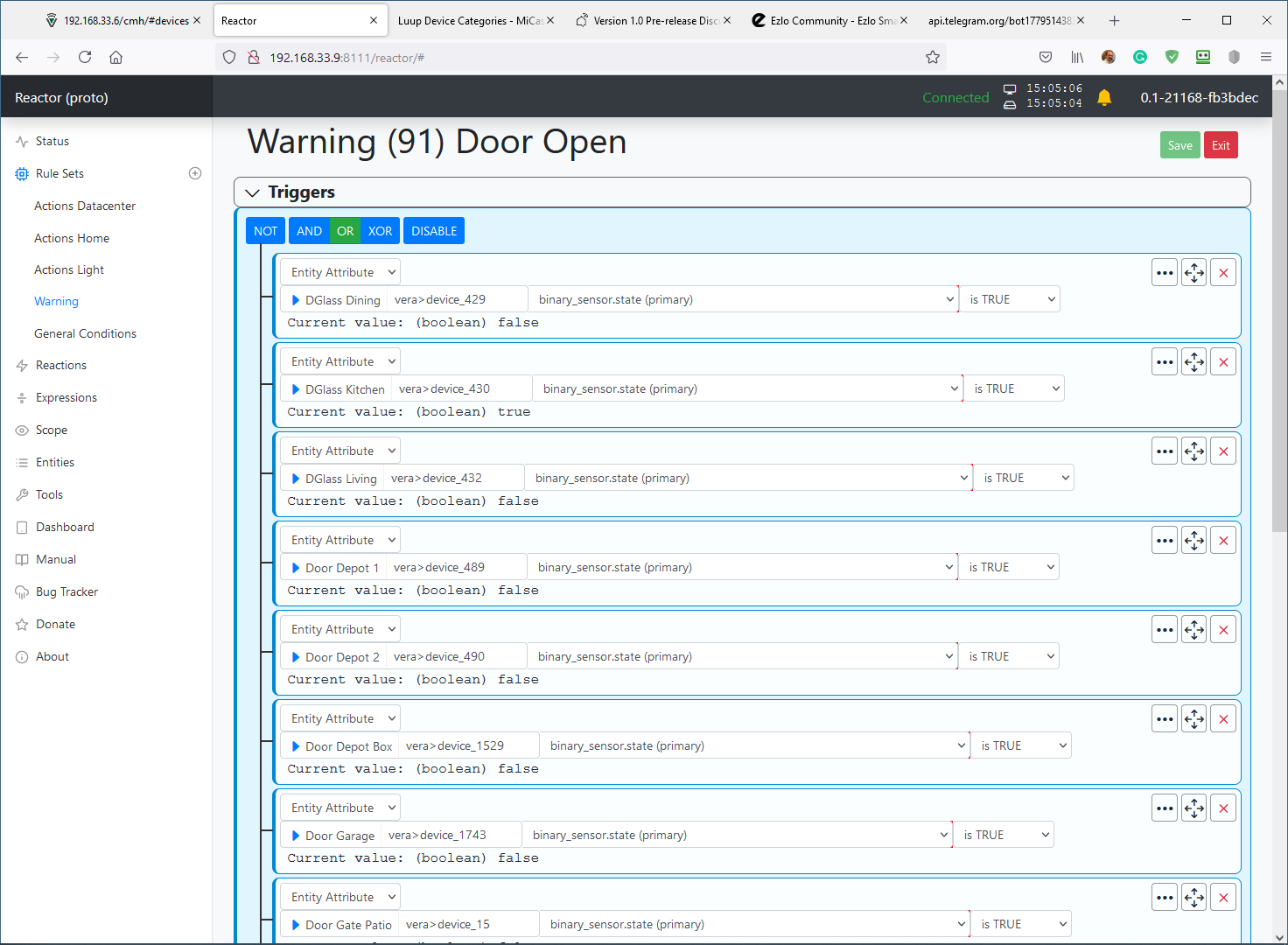
    In Tiggers and Reactions could have an Action by Category/Sub-Category, i.e., instead of having to select all door sensors one by one, if all are in the same group the action would be for all.

    I believe there should be a panel similar to Enteries that would list all the devices based on the existing list (http://wiki.micasaverde.com/index.php/Luup_Device_Categories). The list would have this division and would show the name of all the devices, and it should be possible to select which device would be part of the action. I.e., I can have for example 10 window sensors, but I want only 5 to be part of the group action, I would deselect the other 5 for an independent control.

    In Trigger and Reaction the selection would be as suggested Entety Group Action > a Category selector > and a Subcategory selector > binary_sensor.state (primary) TRUE or FALSE.

    My suggestion is not to have to create an action like the one below.

    f07d7c73-3cee-42bc-9a03-a762b6167604-image.png

    Multi-System Reactor

  • [Solved] Is there a cap or max number of devices a Global Reaction should not exceed?
    wmarcolinW wmarcolin

    Hi, I asked @toggledbits to reopen this very long thread, to give a testimony of a situation that I believe can help others.

    I apologize for the long message, let's recapitulate the history.

    The discussion was based on possible device limits on MSR actions, which Patrick explained there would not be, but the situation described was very similar to the scenario I posted in my message, of numerous failures on actions sent from MSR to Hubitat (December 16, 12:28am). That MSR was much faster than Hubitat could process.

    I posted an example where I had to execute a series of Reactions that would turn on lights, and also turn on outlets, it always failed, I demonstrated that the MSR would activate everything, but Hubitat would not execute.

    Then came the topic and orientation that my Hubitat should not be next to my WiFi router that could be interfering with the Hubitat signal, I even sent a picture on December 17 and provided the change %(#ff8000)[(TIP 1)].

    Well obviously, as the change of position was big, I had to redo 3 times the entire mesh network, adding and removing devices. I followed the instruction of many masters, do the network from the center, i.e., from Hubitat to the outside, including first devices that use electric power because they are repeaters, and then those with exclusive battery power %(#ff8000)[(TIP 2)].

    Well, our friend Patrick releases version 21351 and then 23360 where he adds much more aggressive management in the communication MSR x Hubitat, it improved a lot. But unfortunately, I kept having problems.

    Then I asked for help again to go forward and see what to do to improve, we entered in the theme that several posts from the Hubitat community mentioned devices that use the S0 security, that this creates problems in the mesh network by high traffic of unnecessary information, new action remove and include again the devices that had S0 %(#ff8000)[(TIP 3)], another action that helped the network. What was not possible, we reactivated the Vera hub and put these devices back in, removing them from the Hubitat network.

    We were evolving, but the situation persisted, actions that triggered many actions to Hubitat could still have failures, and the worst actions using Hubitat's own dashboard were also not being executed.

    Well, I returned to the discussion of when I changed the Vera to Hubitat, which highlighted several points of change, but one very bothered me, the Hubitat Z-Wave signal, much weaker than the vera (https://smarthome.community/topic/776/switching-from-vera-to-hubitat/9?_=1644189698709).

    Well 4 days ago (2/2), moved by the courage I opened my Hubitat and followed the post (https://community.hubitat.com/t/external-antenna/81396/28) %(#ff8000)[(TIP 4)], and installed an external antenna for z-wave, here I show that I bought and installed (https://community.hubitat.com/t/elevation-c7-possible-faulty-z-wave-radio/52977/91). In this post the discussion started with the theme S0 and S2, and went into the antenna theme.

    MY TESTIMONY OF WHAT HAPPENED

    A revolution, my Hubitat got a new life, it is another equipment:

    • Before I had 15 direct devices in the hub, today after 4 days there are already 36 of 64, and I see that every day is increasing as the network is being restructured. There was the absurdity of equipment in the same environment as the HE, but behind a column, using two other devices to reach the HE that was less than 4 meters away, now communicates directly;
    • There was almost no equipment that communicated at 100kbps, most were between 9.6 and 40, now most are already 100, and a small number, 5/64 are at 9.6 kbps;
    • Remember the thing where I had to turn on several lights and power outlets all together? it didn't fail anymore, as the devices speak better and faster like the HE, I don't see this failure anymore;
    • I also talked about actions commanded by the Dashboard that the device did not respond to, it is not happening anymore either.

    In summary, in my case that 3/4 of the devices are not repeaters, they use batteries, my z-wave mesh network had a lack of repeaters, and this generated a generalized degradation. Now, with this better signal, if not eliminated the problem, I reduced it to almost zero.

    Now pay attention, the operation of putting up the external antenna seems simple, but it is not. The antenna connector that is soldered to the board is very small and difficult to handle. So if you go this way, look for a cell phone repair shop, they will surely have the best technique for this change.

    Thank you, and sorry again for the long message.

    @gwp1 maybe this can help if you still have a problem. Your tip to move the HE away from the Wifi was also precious, thank you.

    @SweetGenius your comment that there might be an overwhelming in the hub was correct, the action_pace action was a help, but the signal improvement I describe was the solution when I have a more fast response of the devices, reducing the overwhelm. Thanks.

    @toggledbits our last messages, before I wanted to incinerate Hubitat, also helped a lot on the way. Thank you for all your dedication.


    Multi-System Reactor

  • Messaging after VERA decoupling
    wmarcolinW wmarcolin

    @droy last week I changed all notification types to a Telegram BOT, it works great, fast and simple.

    Vera

  • ESP32 / ESP8266
    wmarcolinW wmarcolin

    @akbooer I am using an ESP32 with a water passage valve, which generates pulses, and thus controlling the water flow in my house, measuring with a small margin of error of liters, but it is very close to what the company that supplies it charges me.

    Hardware

  • Version 1.0 Pre-release Discussion
    wmarcolinW wmarcolin

    Hi!

    I've only been using MSR for 3 days, so I'm too much of a beginner to have opinions, but I want to try to collaborate:

    1. First thanks to @cw-kid , with the simple tip of the installation page in the manual, I finally managed to take the step and install it on Windows 10. I see some comments on automatic startup, it was simple to put in the task scheduler a bat to run the "node app.js", and works very well on computer restarts. Now I did not understand why the instruction "Running Reactor Continuously" with the command "nohup ./app.sh &", what is the difference?

    2. Regarding the Constraints question, I don't see much value, or don't know how to use them. I thought that if we first have the obligation to meet the Constraints (e.g. be in home mode and time between 8am and 5pm), only then do we start evaluating the Triggers (e.g. movement in room, open door...) it would make more sense to me. That is Constraints as a basic obligation, and Triggers in the next group of the variables of the action. Right now I'm thinking of putting everything in the Triggers block.

    As I commented I only have 3 days, but I already see that Patrick @toggledbits again doing an exceptional job, if the Reactor was already great, I do not know how to classify what will be the MSR by the little I've seen. What I see for the future:

    1. A translation will be needed in the selectors of so many technical terms, for a more fluent, layman-friendly message. An example FROM x_vera_svc_micasaverde_com_SecuritySensor1.Tripped TO only Tripped;

    2. A dashboard unique to the Rule Sets. What you have today allows us to turn on/off, edit, reset... I think of something simple and straightforward like the Action Icon (I love the Reactor icon), green color on, yellow already have conditions met and could go into execution, and red in execution. It would be a dashboard for easier visualization on the phone. If you can then configure that shows or not would be great, who knows version 3, 4....;

    And sorry this may not be the forum, but reading the posts I see a strong tendency to recommend the use of the Docker container. Is there a real difference in usage with respect to having the Windows 10 installation? Are there performance issues? Any functions that will not operate well? Is the communication between HA and the computer running Windows 10 worse? I see on the Vera panel that a device changes condition to unTrigger, and it takes quite a while to see the reaction on the MSR, is there a difference between container and windows?

    Once again my many thanks to everyone for the work being done, I finally see a light in not depending on hardware to be able to have good automation at home, in a simpler way. As many have commented, soon Vera will be just a radio antenna 🙂

    Multi-System Reactor

  • Version 1.0 Pre-release Discussion
    wmarcolinW wmarcolin

    I had forgotten one very important thing, if possible now, that "Reset Reaction" can copy the "Set Reaction" actions from the same rule sets. It will help a lot to configure to turn off several lights that were on before.

    Multi-System Reactor

  • Device information in string or array
    wmarcolinW wmarcolin

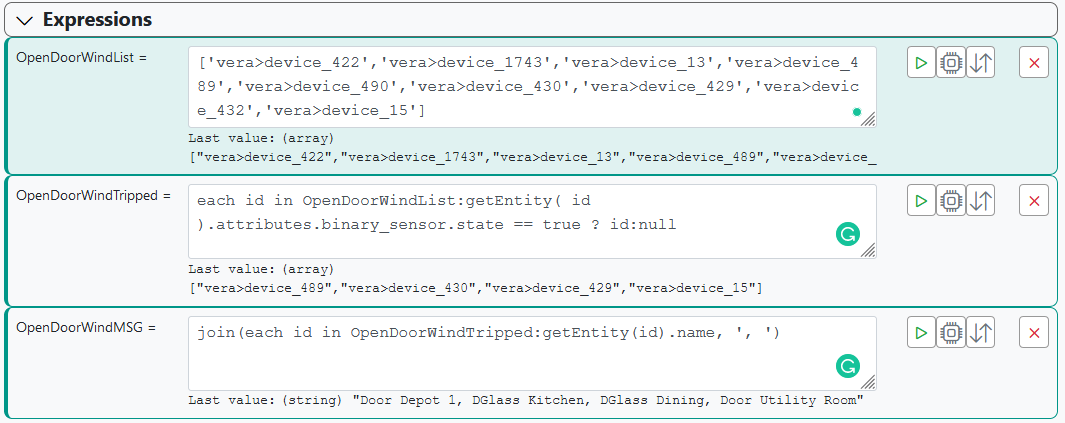
    After much trying and error, I found which attribute to use, and the problem was solved. Thanks @rafale77 and @toggledbits for the tips. Now it opens a universe of new toys to put in my automation, increasing the information.

    1e32985e-dd7a-438c-bfcb-071fc2213759-image.png

    Multi-System Reactor

  • Change instruction in Dome DMS01 device
    wmarcolinW wmarcolin

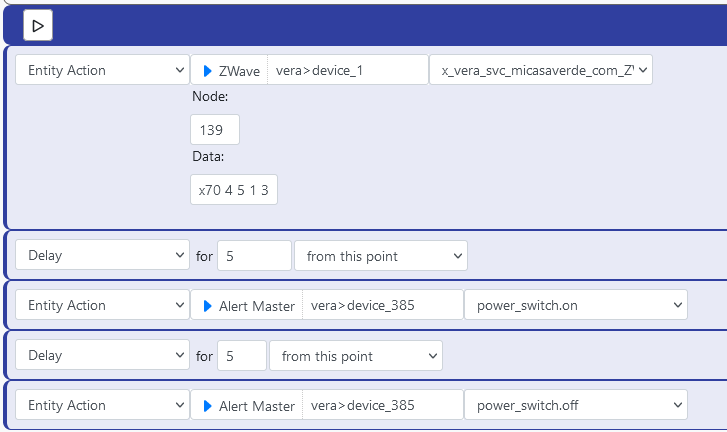
    @toggledbits YOU ARE A GENIUS!

    Direct command is not to the device, it is to ZWave#1

    845ff716-4f72-4da2-8d49-2714e88c0e30-image.png

    Another case closed for Super Patrick!!! Now fun for me, after 3 years I get rid of the ugly way of using the scenes to mediate the configuration of the bells.

    Multi-System Reactor

  • A couple of suggestions for MSR
    wmarcolinW wmarcolin

    @toggledbits

    Surely in an election between all users, this is the most important "a tool to see where I'm using an entity, as trigger or condition". You have already explained before the difficulty, and that the effective use of a DB would help this crossing of information, but the cost of the DB is still high and can sacrifice a lot of the system.

    One day you will find a way to #1 MSR request.

    I would add one more request, that I have commented on before and I am sure you have in your notebook of improvements for the future. In the home screen, the same way you have the Recently Changed Entities board, a board that can show the history of what happens in the Set Rules, so it would be possible to follow the last actions.

    And again and repeat "Thanks for the hard work @toggledbits" !

    Multi-System Reactor

  • Any decent destination for a Vera Plus?
    wmarcolinW wmarcolin

    @toggledbits testing!

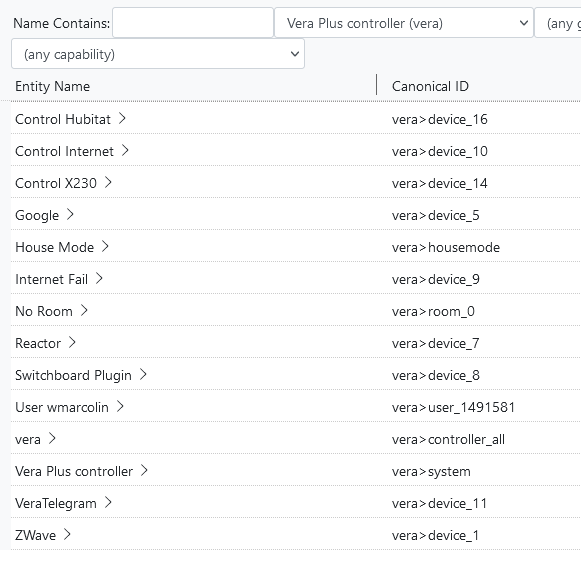
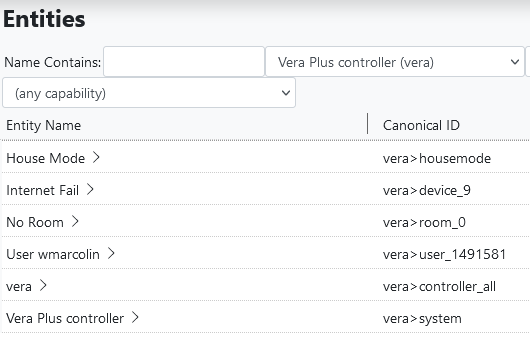
    Perfect removed the indicated

      source: 'http://192.168.33.6:3480'
      filter_entity:
        device_15: true
        device_6: true
        device_13: true
    

    fd8d0186-5691-48bf-b90b-438972e0738d-image.png

    Ok, kept only the informed one that had to stay, removed all the others.

      source: 'http://192.168.33.6:3480'
      accept_entity:
        device_9: true
    

    696126a9-18ee-4e40-afc9-0e48670f964f-image.png

    Thank you very much!

    Hardware

  • Light automation thoughts
    wmarcolinW wmarcolin

    @catmanv2

    Aqara FP1

    Software

  • ESP32 / ESP8266
    wmarcolinW wmarcolin

    @akbooer

    Third-party code, using Arduino I uploaded the code to program the WiFi on the board, and then installed the drives on Hubitat, very simple and fast.

    The part that was a little more complicated was the tuning of the valve, I used another digital meter for the initial reading and then adjusted in a simple way the conversion from pulses to liters that appears in Hubitat.

    (https://www.amazon.com/dp/B007NHS9M4?psc=1&ref=ppx_yo2ov_dt_b_product_details)

    Finally, I generated the device for the MSR, and then the world of play started, all exported to influxDb and Graphana.

    Hardware

  • Vera firmware 7.32 beta
    wmarcolinW wmarcolin

    @toggledbits and @gwp1 THANKS!!!!

    Vera

  • Merry Christmas/Happy Holidays
    wmarcolinW wmarcolin

    Merry Christmas/Holidays! or
    Feliz Natal/Festas! 🇧🇷
    ¡Feliz Navidad/Festividades! 🇵🇦

    General Discussion

  • Global variable in numeric format
    wmarcolinW wmarcolin

    Teacher @toggledbits , thanks for the lesson, problem solved.

    Multi-System Reactor

  • Is Hubitat to HA Bridge possible?
    wmarcolinW wmarcolin

    @droy

    I have just integrated Alexa to Hubitat, very simple to do. First add the APP to Hubitat, then search in the App top right corner, the video that very simply explains how to do the integration. Easy and fast.

    Thanks

    General Discussion

  • Is Telegram working?
    wmarcolinW wmarcolin

    @cw-kid this comment about having the letters bot in front is already added by MSR, we have to be careful, because when we copy the ID when it is generated in Telegram it comes with these letters bot in front that has to be removed when configuring. I had the same problem until I identified this in the log appearing twice botbot.

    Multi-System Reactor

  • Change in Plans (Don't Panic)
    wmarcolinW wmarcolin

    Hi,

    I have already commented on the other forum that my VeraPlus was saved from an incinerator or the tires of my car a few times, thanks to Reactor, and gained new life with MSR, so Patrick you know that you have in my person a collaborator (with limitations of technical knowledge), but a person who likes to explore and especially give suggestions that help users.

    But, in my humble opinion, I will not make the mistake of buying an eZLO, I am seriously considering investing now in a Hubitat because I am tired of my VeraPlus being incompatible with any ZegBee or other devices with S2. The eZLO developers should follow the same line of not listening to the 3PP, the independent developers, and go back to repeating Vera's mistakes in my opinion.

    This way I recognize your huge effort for the HA community, I am sure you have done a lot but in this new eZLO endeavor I will not be able to help, count me full on MSR for VeraPlus and Hubitat.

    Multi-System Reactor

  • [solved] Ordering of global expressions
    wmarcolinW wmarcolin

    @librasun looks like you have some interesting expressions, like this one at the timestamp 😊

    Can you share the full screen for us to look at? And of course use good ideas 😁

    And your last comment is very good, we can find each other, but to reproduce and explain is another story 🤨

    Multi-System Reactor
  • Login

  • Don't have an account? Register

  • Login or register to search.
  • First post
    Last post
0
  • Categories
  • Recent
  • Tags
  • Popular
  • Unsolved